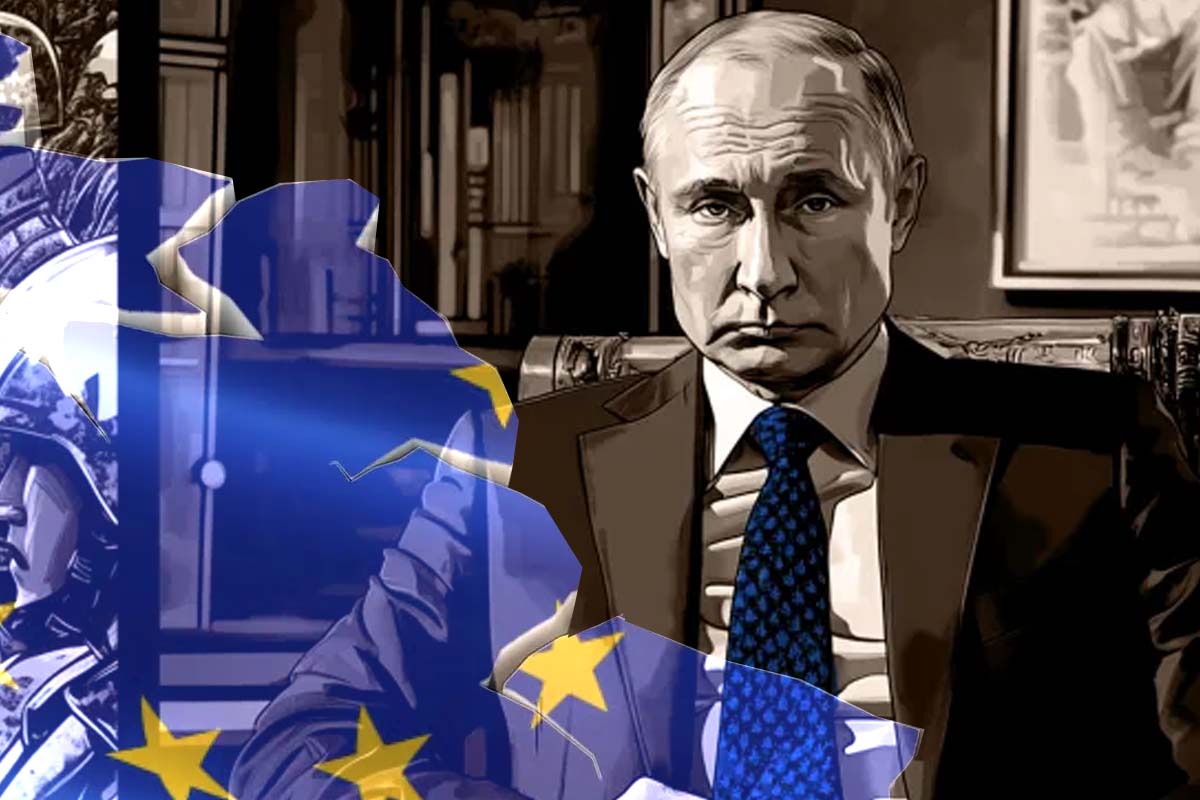
Europe’s fear isn’t of Russia, it’s of itself. The Guardian splashed its front page with the usual hysteria, hoping readers wouldn’t notice the one line that undercut the entire narrative: “We are not planning to go to war with Europe… but if Europe starts one, we are ready.”
That single sentence collapses the entire Mockingbird script. For months, European leaders have warned that Russia is plotting a continental firestorm — yet it’s Europe that keeps blocking peace proposals, stoking escalation, and trembling not at Moscow, but at its own restless streets.
Putin’s remark came just before he met with Trump’s envoys, Jared Kushner and Steve Witkoff — yes, diplomacy, not the conduct of a man about to launch a blitzkrieg. Yet Europe’s elites project their own intentions outward, speaking of “preemptive strikes” while begging their disillusioned citizens for consent to wage a war almost nobody supports. When Putin says Russia is “ready,” it’s not bluster — it’s deterrence. Russia no longer needs to rattle sabres; its industrial base, manpower, and cohesion have already eclipsed the West’s fragmented, bureaucratic, and exhausted war machine.
But in London, “ready” gets mistranslated as “wants.” It’s an old reflex. For centuries, Britain survived continental wars by provoking them from afar — sacrificing others’ sons, then claiming moral victory at the peace table. That old imperial trick no longer works. You can’t keep sabotaging negotiations, funding escalation, and playing the arsonist, then act terrified when the region’s strongest military quietly reminds you that your fantasies now carry consequences.
Western Europe — Britain above all — still mistakes geography for protection. It clings to the myth that the Channel, NATO treaties, and the past can keep modern war at bay. But in an era of hypersonic missiles, cyberwarfare, and energy blockades, maps no longer matter. Range does. Resolve does. And Russia, unlike Europe, has both in abundance.
Here lies the truth their newspapers won’t print: being ready for war isn’t the same as wanting it. Russia’s readiness is defensive — shaped by history, doctrine, and resilience. Europe’s panic is offensive — born of denial, decadence, and political decay. When Moscow says, “we prefer peace, but we are prepared for war,” Europe hears only “war.” Because peace would force a reckoning: accountability for leaders who mortgaged their citizens’ futures on a crusade that was never theirs to fight.
When Putin says Russia is ready, it isn’t a threat — it’s a diagnosis. He’s speaking to a generation of European elites raised on slogans, shielded by American protection, and unaccustomed to consequence. His message is blunt: the game has changed. The unipolar world is over. Your proxy war is collapsing. The age of impunity — when Europe could provoke Russia and hide behind Washington — is finished.
The United States, for all its duplicity, is at least talking to Moscow — cautiously, quietly, pragmatically. Europe, meanwhile, chooses escalation, preferring a suicidal march toward ruin rather than facing the fury of its own people once the dust settles.
Russia hasn’t declared war.
It has declared reality.
Moscow is prepared for the consequences of Europe’s delusions.
Europe isn’t — and that’s the source of its fear.
Not Russian aggression.
But Russian clarity — and the spectre of revolt on Europe’s own streets.