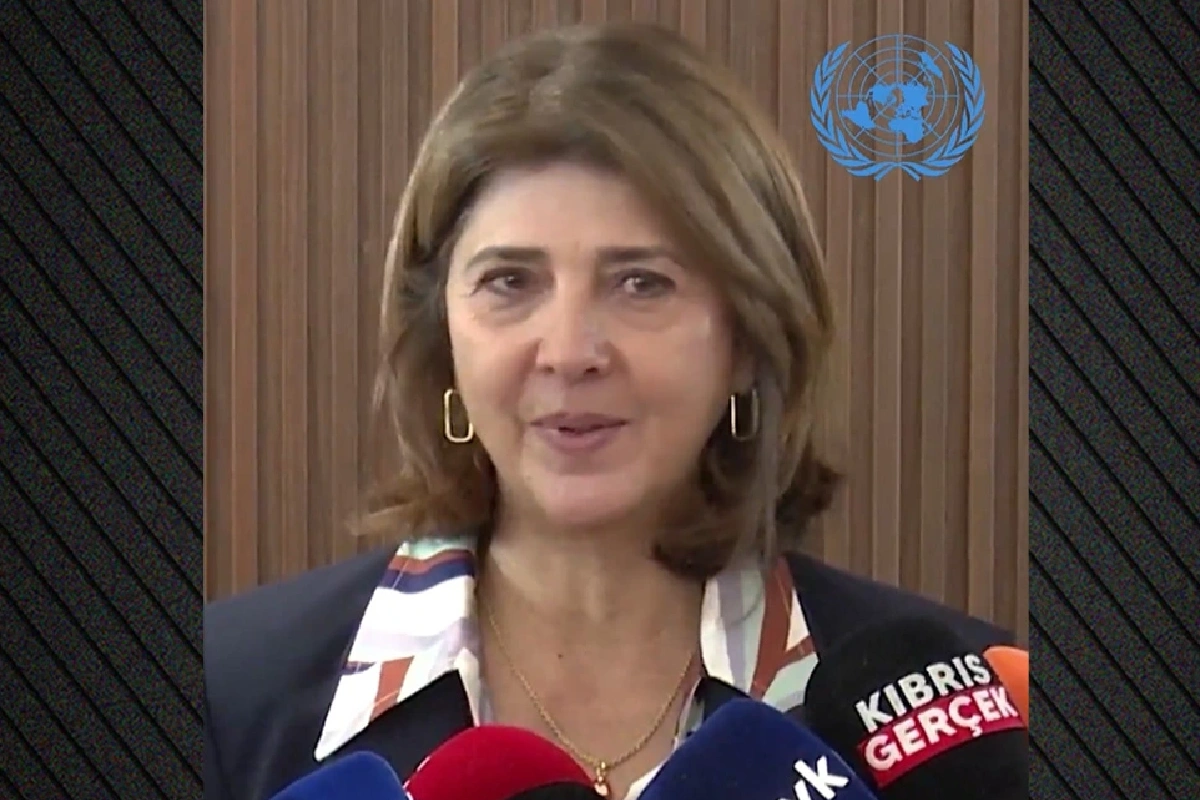
A diplomatic misstep by the UN Secretary-General’s personal envoy for Cyprus, María Ángela Holguín Cuéllar, has triggered strong reactions across the Republic of Cyprus, after she referred to the Turkish-occupied northern territory as the “Turkish Cyprus side” in an official UN video.
The comment appeared in a short recording posted on the UN’s Cyprus account on Platform X, shortly after Holguín met with Tufan Erhürman, the leader of the Turkish Cypriot administration in the occupied areas. The phrasing immediately sparked a wave of anger online, with many Greek Cypriot users accusing the UN of adopting terminology aligned with Ankara’s narrative.
A sensitive phrase in a diplomatic minefield
In the video, Holguín describes her meetings on both sides of the island. At one point, she refers to the occupied territory as the “Turkish Cyprus side”, wording that implies the existence of two equal entities—an idea explicitly rejected by United Nations Security Council Resolutions 541 and 550. These resolutions reaffirm the sovereignty and territorial integrity of the Republic of Cyprus and declare the unilateral declaration of the so-called “Turkish Republic of Northern Cyprus” legally void.
For Nicosia, the use of such terminology is far more than a linguistic slip. It is seen as a potentially dangerous deviation from UN-established legality at a time when Turkey is pushing internationally for the political upgrading of the breakaway administration.
Backlash on social media but no formal government response yet
While the Cypriot government has not issued an official protest so far, the reaction on social media has been immediate and intense. Hundreds of users demanded clarification from the UN, arguing that the envoy’s wording undermines decades of international policy and could be interpreted as tacit recognition of a “Turkish Cyprus.”
The frustration reflects broader concerns that international actors may be adopting more ambiguous language around the Cyprus Issue, particularly as diplomatic momentum has remained stalled since the collapse of negotiations in Crans-Montana in 2017.
An unhelpful moment ahead of a critical meeting
Holguín announced that she intends to host a joint meeting between President Nikos Christodoulides and Tufan Erhürman next week in an effort to revive peace talks. The timing of her linguistic error, therefore, has added tension to an already delicate process.
The envoy has repeatedly warned that the seven-year stalemate has deepened political, social, and psychological divides between the two communities, making the search for a shared vision increasingly difficult.
Words matter — especially from the UN
In a conflict where diplomacy often hinges on semantics, the choice of words is never trivial. For the Cypriot government, every expression that appears to “blur” the international status of the Republic of Cyprus carries political weight.
Even if the UN ultimately explains the phrase as a mere verbal slip, many in Cyprus believe the damage has already been done on a symbolic level. As one diplomat in Nicosia noted, “When the UN itself misphrases the situation, it becomes harder to convince the world of the legal realities.”