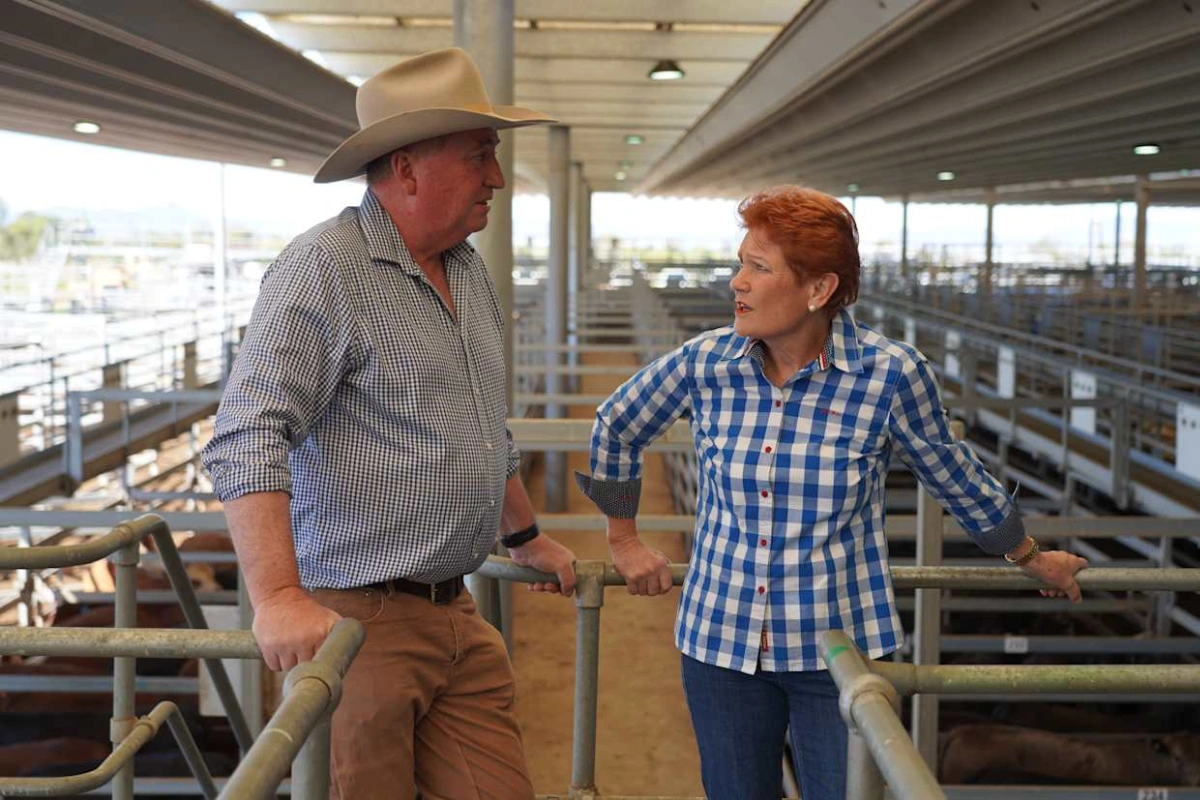
One Nation has reached the highest level of national support in its history, according to new polling that shows the party surging on the back of Barnaby Joyce’s dramatic defection and renewed controversy surrounding Pauline Hanson.
The findings suggest the party’s recent prominence — both politically and culturally — has resonated strongly with segments of the electorate, while simultaneously deepening divisions among voters.
The latest national survey shows One Nation’s primary vote rising to 17 per cent, a landmark high that places the party well ahead of its usual range and approaching the support levels secured by Australia’s largest political blocs. The figure represents half of Labor’s 34 per cent primary vote and remains behind the Coalition’s 26 per cent, yet it marks an unprecedented foothold for the minor party.
The polling was conducted in the days before Mr Barnaby Joyce’s announcement that he would leave the Nationals and join One Nation, where he is expected to lead the party’s 2028 NSW Senate ticket. His move sent shockwaves through federal politics, ending decades of association with the Coalition and recasting him as one of Australia’s most high-profile political defectors in recent memory.
Interestingly, the data shows voter reactions to Mr Joyce’s shift were sharply mixed. More than 30 per cent of respondents said they would be more likely to back One Nation if he became leader, while 42 per cent said the opposite. The division underscores the complexity of Mr Joyce’s political persona: for some, he is a blunt and authentic voice; for others, a figure marked by controversy and unpredictability.
The polling also captures the fallout from Pauline Hanson’s widely criticised burqa stunt in the Senate last month — an action that led to her suspension for the final sitting week. Voters were again split: 42 per cent said the stunt made them less likely to support the party, while 35 per cent said it increased their support. The incident highlighted Ms Hanson’s longstanding approach of using provocative symbolism to draw national attention, even at the risk of political backlash.
At the 2025 federal election, One Nation achieved a 1.44 per cent national swing, translating to nearly one million first-preference votes and doubling its Senate representation to four seats. The party has capitalised on its momentum with high-profile appearances, including Ms Hanson’s participation in the Australia First rally in Melbourne.
Beyond party politics, the polling paints a bleak picture of Australian sentiment heading into the Christmas period. Rising interest rates, persistent inflation and escalating housing costs continue to dominate public anxiety.
Sixty per cent of respondents said they were pessimistic about Australia’s ability to manage the cost-of-living crisis. Close to three-quarters fear further increases in grocery prices, energy bills, rents and mortgage repayments in 2026. More than half said they lack confidence that affordable housing solutions will be delivered in the near future.
Concerns extend beyond domestic issues. Fifty per cent expressed pessimism about migration levels, while a significant 61 per cent believe the world is entering an increasingly divided and unstable period. The results suggest that voters’ growing unease may be fuelling support for non-major parties promising stronger action, clearer messaging, or more confrontational approaches.
With One Nation now achieving its strongest polling performance ever, the major parties face renewed pressure to understand — and respond to — the discontent propelling Australians toward minor-party alternatives.