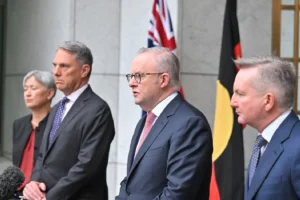
Australia’s leadership has clarified that the country will not become directly involved in the growing conflict in Iran, even as it continues to support US-led strikes in the region.
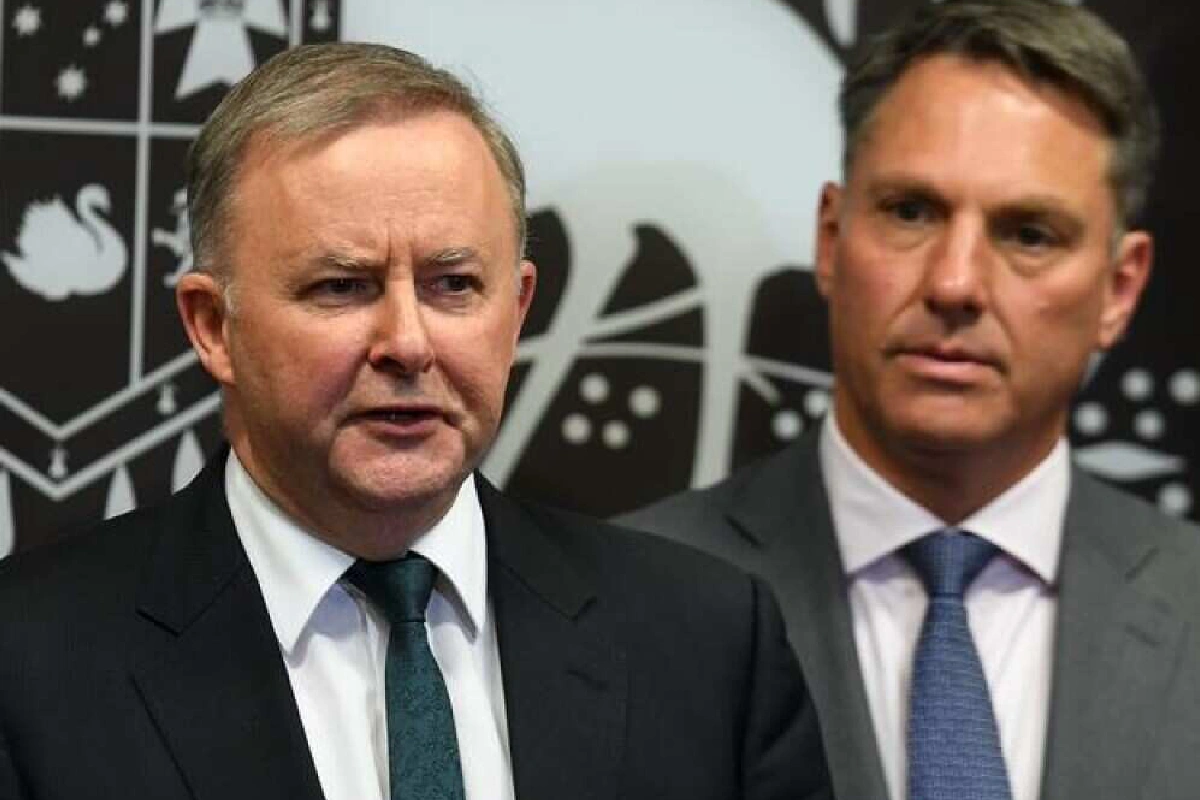
Prime Minister Anthony Albanese told ABC’s 7.30 program that Washington had not requested Australian assistance and he did not anticipate such a request. “It’s a long way from Australia, and we are not major players in the Middle East,” he said, emphasizing that Australia’s role will remain limited to diplomatic and strategic support.
Deputy Prime Minister Richard Marles reinforced this position on Nine’s Today program, stating, “No, we’re not being asked to participate. It’s difficult to predict exactly how long this conflict will last, but we are monitoring developments closely.” He added that while Australia supports the US-led operation, its core purpose is to prevent Iran from developing deployable nuclear weapons—a threat that could destabilize the region and global security.
Australia had been among the first nations to publicly endorse the weekend strikes, which followed months of failed negotiations with Iran over its nuclear program, ballistic missile production, and backing for militant groups including Hezbollah, Hamas, and the Houthis. The strikes resulted in the death of Iran’s supreme leader, Ayatollah Ali Khamenei, in targeted US-Israeli operations.
The weekend also saw retaliatory Iranian missile attacks on Al Minhad Air Base in the United Arab Emirates, where over 100 Australian defence personnel are stationed. Marles confirmed that all Australians at the base were “safe and accounted for” and no injuries occurred. “Most of our personnel are in the UAE, where we have maintained a long-standing operational headquarters,” he said.
Opposition frontbencher Andrew Hastie, a veteran of Australia’s special forces, described the US-Israeli strikes as part of a “larger strategic plan” aimed at China. He noted that Beijing imports up to 80% of Iran’s oil via third-party networks and said, “By targeting Iran, the United States may be disrupting a critical oil supply for China’s industrial base while reasserting global deterrence.”
Reserve Bank Governor Michele Bullock also commented on the unfolding crisis, warning that geopolitical instability could have unpredictable effects on energy prices, inflation, and global economic activity. “The events in the Middle East are a timely reminder of how quickly circumstances can change. We are alert to potential inflationary pressures, though the full impact on the Australian economy is not yet clear,” she said.
While Australia continues to express strong political support for US and Israeli actions against Iran, both Albanese and Marles have reiterated that the country will not send troops into the conflict. Government officials are instead focused on monitoring the situation, ensuring the safety of Australians in the region, and responding diplomatically where necessary.