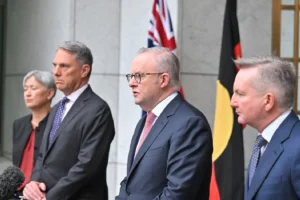
The Australian government has announced its most significant national gun buyback scheme in decades, in the wake of the deadly terror attack at Sydney’s Bondi Beach that claimed the lives of 15 people, including a 10-year-old girl and left dozens injured.
Prime Minister Anthony Albanese unveiled the initiative, calling it the most extensive firearm buyback since the 1996 program introduced after the Port Arthur massacre. The plan aims to reduce the number of surplus, newly banned and illegal firearms across the country while strengthening gun laws significantly.
Albanese said the scheme — to be funded jointly by the Commonwealth and the states and territories on a 50:50 basis — would target excess guns and bolster public safety by removing weapons that pose risk. The Australian Federal Police will oversee the destruction of collected firearms, while state authorities manage collection and compensation to gun owners. The federal government is also exploring wider gun law reforms, including limits on how many firearms a single person can own, an accelerated national firearms register, and making Australian citizenship a condition for holding a licence.
The announcement comes as Australia continues to process the fallout from the Bondi Beach terror incident. The federal government has declared Sunday, December 21, a national day of reflection to honour victims and encourage communal mourning. Thousands have already participated in memorials, including paddle-outs by surfers in Bondi.
Authorities remain vigilant. A group of men previously detained in Sydney’s southwest on suspicion of planning violent acts believed to be ideologically linked to the Bondi attackers is under review and may be released if there is insufficient evidence to justify continued detention.
At hospitals across Sydney, those wounded in the attack are continuing their recovery, including a bystander who heroically disarmed one of the gunmen and underwent multiple surgeries. The NSW government and federal counter-terror authorities have reaffirmed their commitment to tightening hate crime legislation and stepping up security measures amid ongoing threats and investigations.
The buyback has sparked debate across political lines and within the gun-policy community, with some resistance from gun owners and calls for a wider focus on social issues alongside firearm control. Nevertheless, the government insists that reducing the sheer volume of weapons in circulation — now more than four million — is a critical step in overcoming systemic risks and preventing future tragedies.