The Allan government is preparing to cut an estimated 1000 public service jobs and abolish or merge nearly 30 government entities, following the release of a landmark review aimed at trimming Victoria’s rapidly expanding bureaucracy.
The move, which the government says will ultimately save $1 billion annually, is the most significant administrative shake-up undertaken in years.
The changes stem from the long-awaited Silver Review, a $2 million assessment led by former Department of Premier and Cabinet secretary Helen Silver. Delivered to the government almost six months ago but only released in full on Thursday, the review paints a stark picture of ballooning bureaucracy, including a 16 per cent growth in the public service and a 52 per cent increase in executive positions since 2019.
Silver warned that the system had become excessively layered and inefficient, noting that the pandemic accelerated the rise in executive and specialist oversight, creating sluggish decision-making and weakened accountability. She argued that the scale of growth could not be justified. Her final report included 52 recommendations, projecting $5 billion in savings over four years, more than 2000 job reductions, and the closure of 78 state entities—20 of which were created only since 2020.
Under the government’s plan, 29 government entities and boards—such as Sustainability Victoria, Cladding Safety Victoria, the Latrobe Health Assembly, and the Road Safety Camera Commissioner—will be abolished. Others, including VicHealth, Healthshare Victoria, and Court Services Victoria, will be effectively dismantled or absorbed into departments.
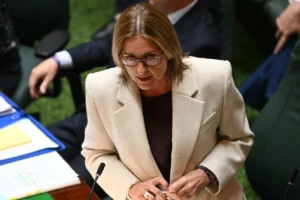
Premier Jacinta Allan and Treasurer Jaclyn Symes confirmed that while the government accepted 27 recommendations in full and 18 in part or in principle, it rejected seven. Symes stressed that frontline workers—nurses, teachers, police and child protection staff—would not be affected. Instead, the cuts will focus heavily on senior positions, with 332 executive roles expected to go.
Symes said implementing the accepted recommendations will begin immediately, including reducing consultant use, shrinking the CBD office footprint, and merging entities with overlapping functions to improve service delivery. She said the reforms would make navigating government simpler for citizens and businesses by cutting duplication and reducing bureaucratic complexity.
However, the government rejected several recommendations, including axing a secondary school music program, reducing funding to the boating fund and pausing new early learning centre developments. Despite this, legislation beginning the merger process will be introduced to parliament this week, marking the start of a politically sensitive overhaul expected to reshape Victoria’s public sector over the coming years.