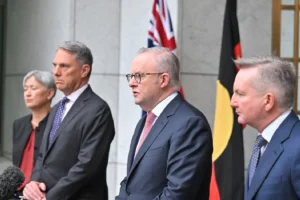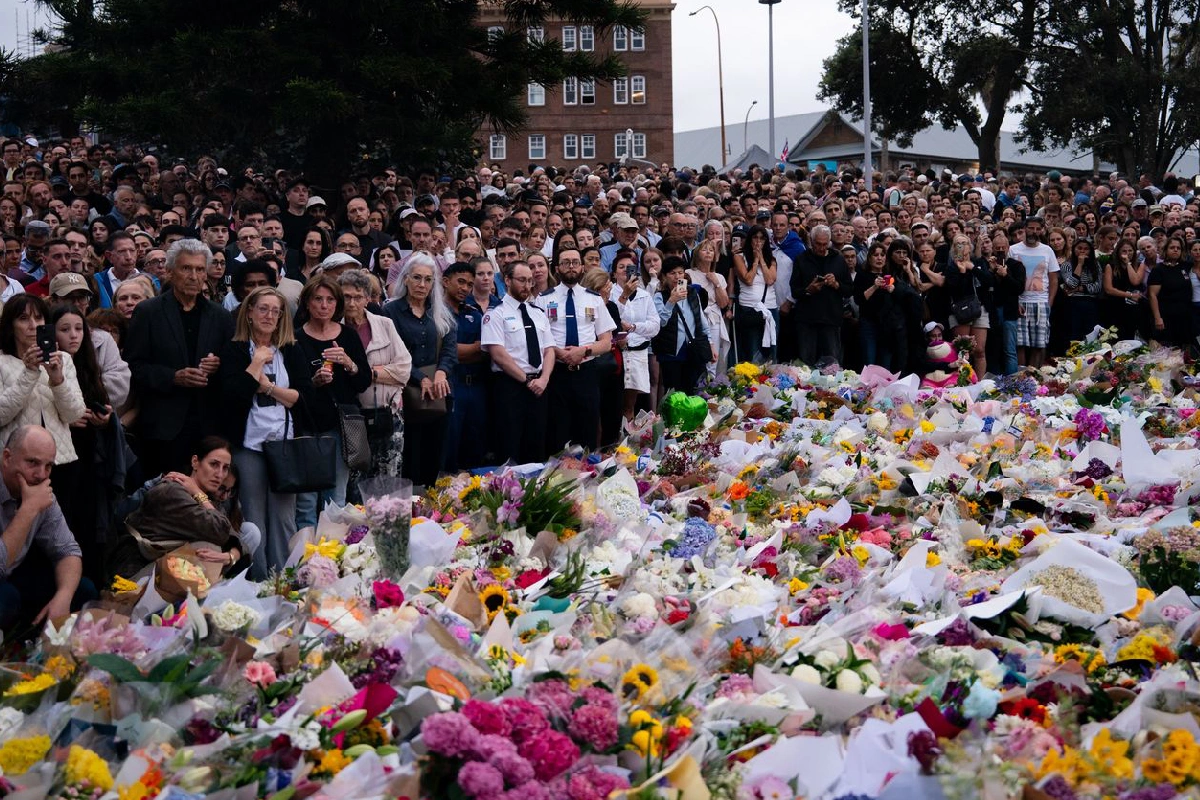
Australia’s political leadership has been drawn into a sharp and emotionally charged debate following the terrorist attack at Bondi Beach, as senior figures clash over whether tighter gun laws or a stronger response to antisemitism should be the national priority.
Nationals Leader David Littleproud has openly challenged the federal government’s push to tighten firearm regulations, arguing that Australia’s existing gun laws are not responsible for Sunday’s attack. Instead, he says, the real failure lies in the country’s response to rising antisemitism.
Speaking to ABC Radio National Breakfast, Littleproud accused Prime Minister Anthony Albanese of using gun reform as a political distraction. “The current gun laws were not the problem,” he said. “It was the people who were using the guns and using the bombs. They were terrorists.” According to Littleproud, police already have the legal powers to identify and restrict individuals who pose a national security risk, and further firearm restrictions would do little to prevent ideologically driven violence.
His comments came just hours after National Cabinet agreed to tighten state and territory gun laws, including exploring limits on the number of firearms an individual may possess. Leaders also agreed to examine whether Australian citizenship should become a requirement for holding a gun licence — a proposal that has already sparked constitutional and civil liberties concerns.
Deputy Prime Minister Richard Marles rejected claims that antisemitism was being sidelined, describing it instead as central to the government’s response. He said antisemitism was “at the heart” of the Bondi Beach attack and warned that Jewish Australians have felt unsafe “for a long time.”
Speaking to Channel Seven, Marles acknowledged criticism of the government’s handling of antisemitism since the October 7 attacks in Israel, conceding that existing measures have not gone far enough. “We need to do so much more,” he said, describing the fight against antisemitism as a long-term national project that will require sustained political will and social unity. While pointing to initiatives such as the Segal report, Marles stressed that no single policy response would be sufficient.
Prime Minister Anthony Albanese has sought to position gun reform and action against antisemitism as complementary rather than competing priorities. Defending the National Cabinet decision, Albanese said Australia could not afford inconsistencies between state and territory firearm laws. “What we don’t want is gun laws in New South Wales that are stronger than gun laws in surrounding jurisdictions, because that will lead to gaps in the system,” he said.
At the same time, the Prime Minister admitted that the attack had exposed serious shortcomings within Australia’s intelligence and policing frameworks. He confirmed that authorities would review how agencies interact, including reassessing decisions made as far back as 2019, when the attacker had previously come to the attention of authorities. “Quite clearly there have been real issues,” Albanese said, signalling a broad review of intelligence-sharing and risk assessment processes.
Foreign Minister Penny Wong has attempted to lower the political temperature, refusing to be drawn into criticism from former prime minister John Howard over the government’s recognition of Palestinian statehood. Wong stressed that the moment required empathy rather than political argument. “This is a time where we are grieving,” she said, offering condolences to Jewish Australians who lost loved ones and support to those recovering in hospital. Nevertheless, she conceded that the government must do more to confront antisemitism domestically.
As Australia mourns the victims of the Bondi attack, the debate highlights a deeper national reckoning — not only about gun laws, but about social cohesion, extremism and the effectiveness of institutions designed to protect public safety. The coming weeks are likely to test whether political leaders can move beyond blame and deliver meaningful reform.