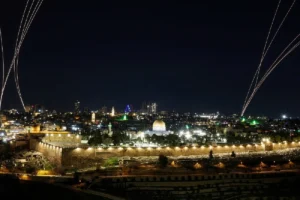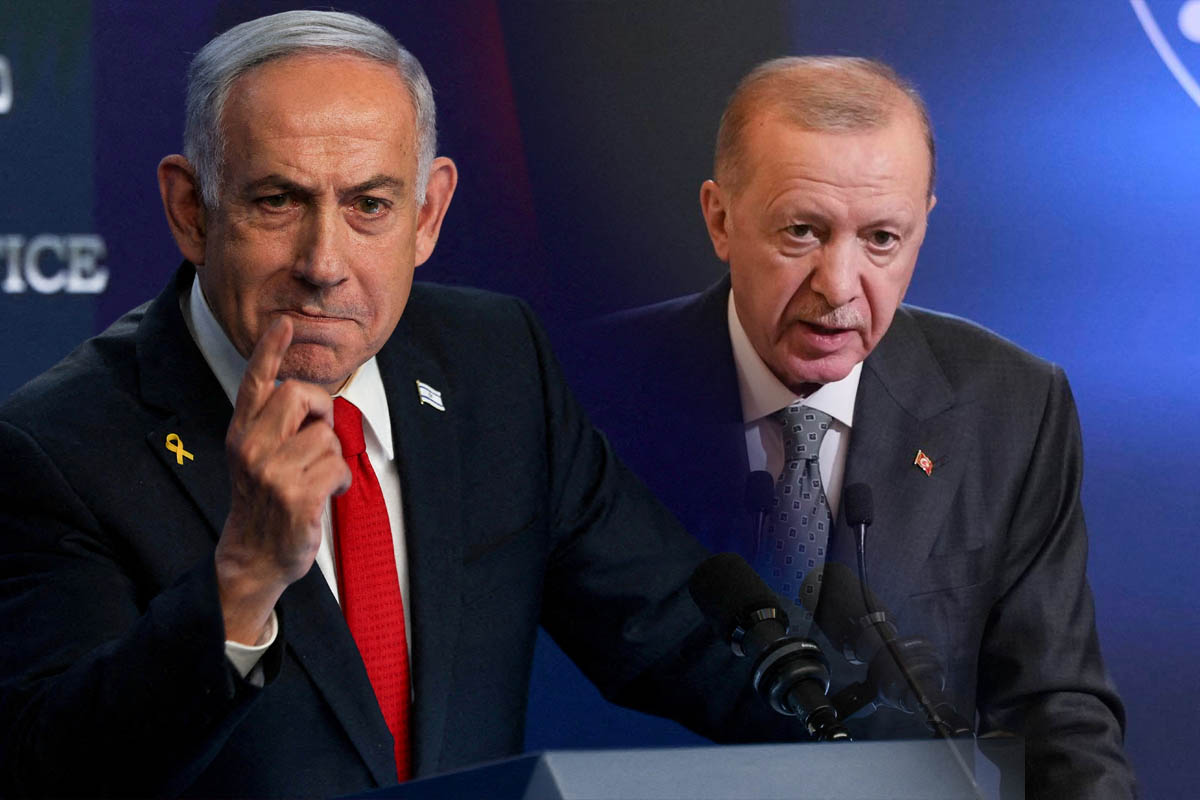
Jerusalem’s decision reflects a principle, not an exception. Somaliland was sovereign before union and has governed itself since that union collapsed. The analogies invoked against its recognition fail on both law and fact. From Somaliland to Cyprus: Why occupation is not self-rule. The Turkish-occupied areas of the Republic of Cyprus are the direct product of invasion and continuing occupation;
Western Sahara remains addressed through autonomy under Moroccan sovereignty; and the Palestinian issue remains unresolved amid internal division and failed governance. What follows from Somaliland is not escalation, but consistency. Sovereignty rests on responsibility, institutions and effective control. Applied coherently, this standard does not end with Somaliland. It bears relevance for Balochistan, Kurdistan and Taiwan.
Israel’s decision on 26 December 2025 to recognise the Republic of Somaliland forced rhetoric to give way to facts. Within hours, familiar analogies flooded opinion pages: Palestine, Northern Cyprus and Western Sahara were all presented as evidence that Israel had crossed a forbidden line. These comparisons invert both history and international law.
Somaliland does not legitimise occupation or forced partition. It was sovereign before union. In June 1960, the former British Protectorate of Somaliland became independent and was recognised by more than thirty states, including the United States and Israel. Days later, it voluntarily merged with the Italian-administered territory to form the Somali Republic. This was a political choice, not a legal or coercive necessity.
That union proved fatally flawed. It rested on defective legal foundations: incompatible legal texts, an Act of Union never properly ratified by both sides, and a northern constitutional referendum marked by low participation and overwhelming rejection. Power soon centralised, repression followed, and when the Somali state collapsed entirely, Somaliland withdrew from a defunct arrangement. In 1991, it restored the independence it had briefly held in 1960 and has governed itself ever since.
Israel’s recognition simply acknowledges reality. It was formal and transparent: mutual recognition, full diplomatic relations, and engagement at the highest political level. It was neither covert nor proxy-driven. It was what states do when pretence ends.
Territorial Integrity Misused
The most common objection invokes territorial integrity. In Africa, post-colonial stability was anchored in inherited borders, not in abstract notions of unity at any cost. That principle exists to deter revisionism. It equally permits separation when it restores an existing colonial boundary rather than inventing a new one. Somaliland seeks recognition within inherited borders. It is not redrawing the map; it is asking the world to read it honestly.
International law does not require external referenda or third-party approval for statehood. The criteria are practical: a defined population, territory, effective government and the capacity to enter relations with other states. Recognition ends denial; it does not create reality.
The Hypocrisy of the Cyprus Comparison
Attempts to equate Somaliland with the Turkish-occupied areas of the Republic of Cyprus collapse immediately. Northern Cyprus is not a disputed entity but territory seized by force following Turkey’s 1974 military invasion, conducted under a distorted interpretation of guarantor rights and followed by permanent occupation, mass displacement and demographic engineering through settler transfers.
The self-declared entity proclaimed in 1983 was declared legally invalid by the UN Security Council, which explicitly called on all states not to recognise it — a position reaffirmed and strengthened in subsequent resolutions. The internationally endorsed outcome remains the reunification of Cyprus as a single sovereign state through a bizonal, bicommunal federation.
To invoke Northern Cyprus against Somaliland is not merely inaccurate; it is hypocritical. It attempts to launder military occupation by analogy and to collapse the distinction between self-governance emerging from state collapse and secession imposed at gunpoint. Somaliland faces no UN prohibition because it is not the product of invasion or occupation. Equating the two trivialises international law and shields Turkish aggression from scrutiny.
Western Sahara and Palestine: Category Errors
Western Sahara belongs to a different category altogether. While the UN still frames it as a decolonisation issue, Morocco’s position is territorial integrity resolved through autonomy, not secession. That autonomy proposal has been described by the Security Council as serious and credible and is widely recognised as the only realistic pathway forward. Somaliland, far from undermining this logic, reinforces it: stability flows from inherited borders, not from statehood manufactured through proxy conflicts.
Nor is Somaliland a proxy debate about the Palestinian issue. Palestinian governance remains divided, territorial control fragmented, and security unresolved. Under the Oslo framework, Israel transferred extensive civil authority and limited security responsibilities to Palestinian self-rule while deliberately avoiding annexation or population absorption. Decades later, unified governance and durable institutions have not emerged, and key territories have repeatedly fallen under the control of terrorist organisations rejecting political settlement altogether.
Somaliland exists entirely outside this framework. Israel’s recognition prejudges nothing regarding a future Israeli-Palestinian agreement, which remains contingent on security guarantees and the emergence of a responsible, unified governing authority. Conflation substitutes rhetoric for responsibility.
Readiness and Responsibility
Claims that Somaliland is “not ready” fare no better. Somaliland has held competitive elections, overseen peaceful transfers of power and demonstrated rare administrative continuity in a volatile region. Imperfection is not disqualification. Recognition is not a reward; it is a mechanism of accountability. Governments treated as real face judgment. Those kept in limbo do not.
Sovereignty is not a slogan. It is a record — built through institutions, order, consent and responsibility. Ambiguity may comfort external actors, but it corrodes legitimacy.
Beyond Somaliland
Catalonia is often raised as a counter-example. The comparison fails. Catalonia sought secession from a functioning democratic state with effective courts, elections and sovereignty. Somaliland exited a collapsing state sliding into repression and failure. When communities insist peacefully on self-governance under such conditions, the gap between legality and legitimacy narrows.
Somaliland is therefore not an outlier but a precedent. Balochistan, Kurdistan and Taiwan already expose the same contradiction: demands for performance without sovereignty, responsibility without recognition.
By recognising Somaliland, Jerusalem demonstrated clarity rather than defiance. The response is not apology but consistency — extending recognition to those who govern themselves, keep commitments and choose partnership over grievance. Somaliland qualifies. Others are no longer abstract debates but live files.