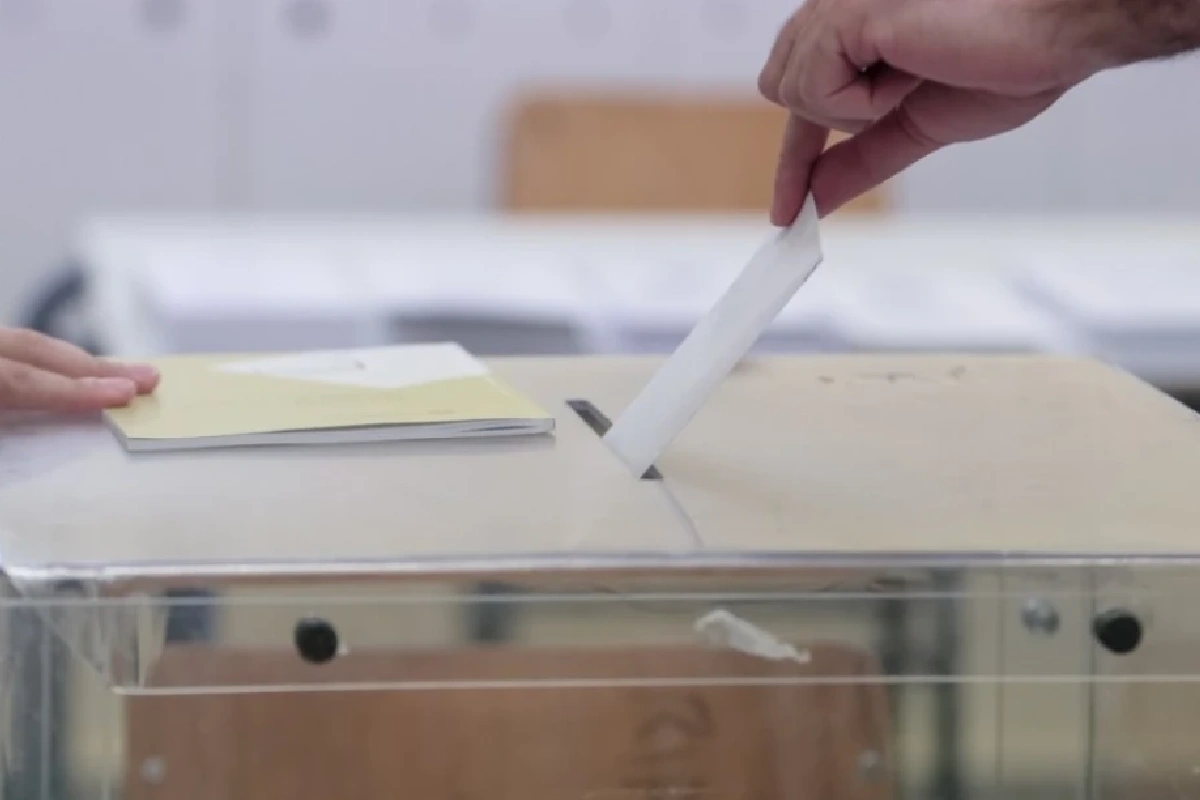
The Minister of Interior, Theodoros Livanios, presented to the Cabinet on Monday morning a comprehensive bill aimed at strengthening the electoral participation of Greeks living abroad.
The legislation, titled “Definition of the Electoral District of the Greek Diaspora and Facilitation of Voting Rights for Voters Outside the Country”, introduces two major reforms that seek to modernize and enhance the representation of expatriate Greeks in the Hellenic Parliament.
The first reform proposes the introduction of postal voting exclusively for Greek citizens living outside the national territory. According to the government, this initiative builds on the successful implementation of postal voting during the 2024 European elections, which demonstrated that Greeks abroad can participate effectively in the democratic process from their place of residence. The application of postal voting will depend on achieving a two-thirds parliamentary majority and could be in effect as early as the 2027 national elections. If the necessary majority is not reached, the current system requiring in-person voting at designated foreign polling stations will remain in place.
The second reform establishes a dedicated electoral district for the Greek Diaspora with three parliamentary seats. This will allow citizens living abroad to elect their representatives directly, ensuring their voices are heard in legislative decisions affecting the nation. Similar to postal voting, the activation of this electoral district also requires a two-thirds parliamentary majority; otherwise, it will be implemented in subsequent elections. The allocation of seats in the Diaspora district will follow the same proportional rules used for other three-seat constituencies, such as Argolis, Laconia, Arcadia, and Boeotia, ensuring consistency in representation across the country.
Government spokespersons emphasized that the bill aims to strengthen the ties between Greeks living abroad and their homeland, allowing them to exercise their democratic rights more efficiently. If the opposition parties acknowledge the need to amplify the voice of expatriate Greeks, securing the required two-thirds majority would enable these reforms to take effect in the next parliamentary elections.
Political reactions have been mixed. PASOK has expressed support for deeper representation of the Greek Diaspora, emphasizing the importance of increasing participation without undermining the proportionality and legitimacy of the national electoral outcome. Kostas Tsoukalas noted that the three-seat system involves a unified ballot without party labels, which could lead to the election of individuals whose party affiliation remains unknown until after the votes are cast. He raised concerns that this system could potentially alter parliamentary balance and create uncertainty regarding future voting alliances.
Tsoukalas emphasized that transparency and clarity in how these matters are presented to Parliament are crucial. The political system can find consensus if all parties play with open cards, he added. The bill represents a significant step toward greater inclusion of the Greek diaspora, balancing the need for democratic representation with constitutional safeguards and electoral fairness.