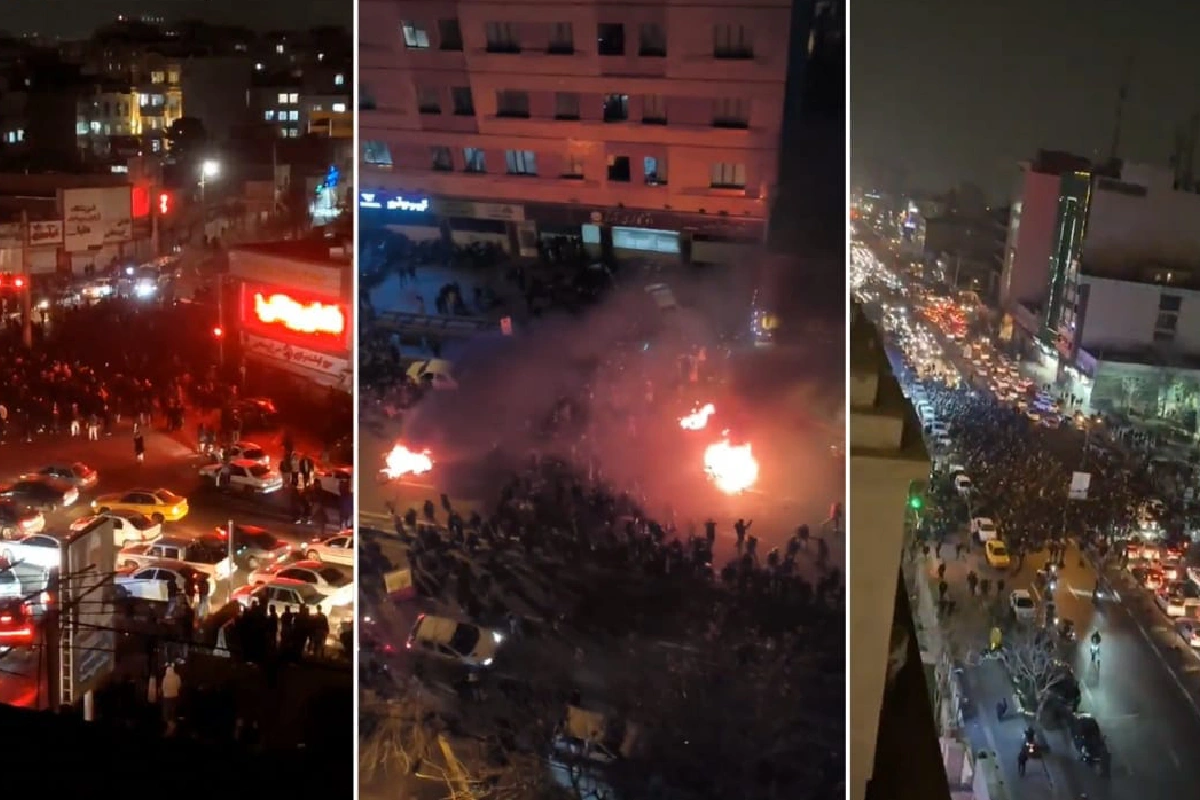
Iran has been plunged into its most dangerous wave of unrest in years as mass protests swept across the country overnight, with demonstrators flooding the streets of Tehran and other major cities, buildings set ablaze, and the regime scrambling to contain a rapidly escalating crisis.
According to verified footage aired by BBC Persian, thousands of protesters poured into central Tehran late Thursday, chanting defiant slogans such as “Death to the dictator” and “This is not the final battle — Pahlavi will return.” Car horns blared continuously as vehicles struggled to move through dense crowds, underscoring the scale and intensity of the demonstrations.
Social media videos, authenticated by international media, show fires burning along major roads, with several buildings engulfed in flames. One reported blaze may have struck offices linked to Iran’s state broadcaster, IRIB, in the city of Isfahan, though the full extent of the damage remains unclear.
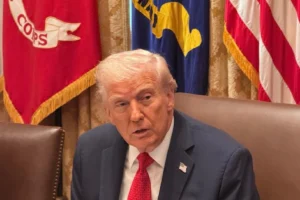
As the unrest intensified, former US President Donald Trump issued a stark warning to Tehran, threatening a “very severe attack” should Iranian authorities kill protesters.
“If they start killing people, we will hit them very hard,” Trump said, dramatically raising international tensions around an already volatile situation.
Meanwhile, Iranian state media has sought to downplay the scope of the unrest, broadcasting footage of empty streets and claiming conditions are “normal” in cities such as Shiraz, Isfahan, Sanandaj and Bushehr. Officials have dismissed protesters as a small group of “rioters,” a narrative sharply contradicted by independent footage from the capital.
In a move widely interpreted as an attempt to suppress communication and coordination among demonstrators, Iran experienced a nationwide internet blackout earlier in the day. Cybersecurity watchdog Netblocks confirmed the outage, describing it as part of an escalating campaign of digital censorship.
“This incident follows a pattern of increasingly aggressive internet restrictions aimed at suppressing protests and preventing the public from communicating at a critical moment,” Netblocks said.
Iranian President Masoud Pezeshkian urged restraint, calling on authorities to avoid violence and engage in dialogue with protesters.
“Any violent or coercive behaviour must be avoided,” he said in a statement, urging officials to listen to the people’s demands.
The protests began in Tehran on December 28 following the collapse of Iran’s national currency, but quickly evolved into a broader uprising against the political establishment. By Friday morning, BBC Persian reported that more than 50 cities and towns — particularly in Iran’s Kurdish-majority regions — had joined a general strike, with shops closing in solidarity.
According to the Human Rights Activists News Agency (HRANA), at least 34 protesters and four members of the security forces have been killed so far, while more than 2,200 demonstrators have been arrested.
As night falls again across Iran, the country stands at a perilous crossroads, with domestic unrest intensifying, international pressure mounting, and the threat of further violence looming large.