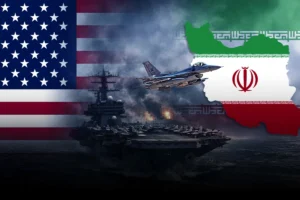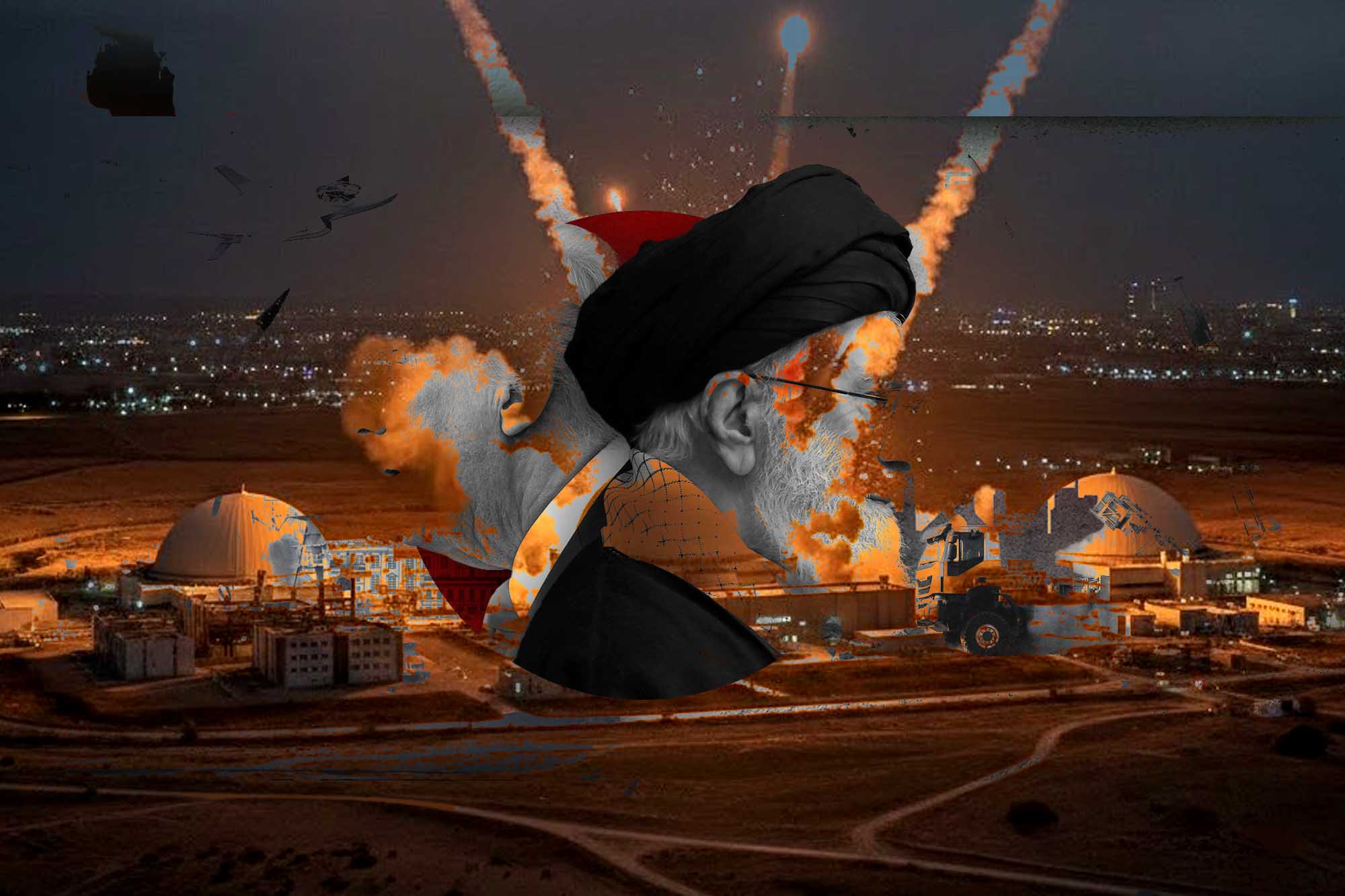
Recent satellite imagery published by The New York Times — a major Western news outlet rather than partisan or state media — appears to indicate significant damage to elements of US military infrastructure across the Gulf following Iranian strikes. Iran’s Gulf strikes expose cracks in America’s missile shield.
According to analysis of the imagery, several American facilities across the region were targeted in what appears to have been a coordinated pattern. These reportedly include installations in Bahrain, home to the US Fifth Fleet, as well as bases in Qatar, Kuwait, Saudi Arabia and the United Arab Emirates.
Among the installations affected are communications facilities, satellite communication terminals, radar domes and missile-tracking infrastructure. Analysts note that these systems form part of the integrated network that enables US missile-defence platforms — including Patriot and THAAD systems — to operate as a coordinated regional shield.
The imagery suggests that the strikes were not random but focused on the command, communication and sensing architecture that underpins American defensive systems in the region. Military observers point out that disabling radar and communications nodes can degrade the effectiveness of interception systems even when launchers and missiles remain intact.
For decades Iran has studied the structure of American military operations, including how US forces link radar, satellites and air-defence batteries into a single operational network. Some defence analysts now argue that the latest strikes reflect a doctrine designed to target the “eyes and ears” of that system rather than simply attacking bases themselves.
Penetration tactics and missile defence saturation
Images circulating among defence analysts are also being interpreted as evidence of more sophisticated ballistic missile technology. According to several analysts, the imagery appears to show an Iranian ballistic re-entry vehicle accompanied by penetration aids — decoys designed to overwhelm missile-defence systems.
These decoys are intended to complicate interception across multiple layers of defence: Patriot systems in the terminal phase, THAAD interceptors in the upper atmosphere, and systems such as Arrow-3 operating at exo-atmospheric levels. By flooding defensive networks with multiple targets, penetration aids can force defenders to expend large numbers of interceptors.
In missile-defence doctrine, the objective is not always to defeat the shield outright. Instead, it may be sufficient to saturate it — forcing defenders to launch interceptors faster than they can be replenished. Several analysts note that missile-defence inventories are finite, and sustained attacks can rapidly deplete stockpiles.
Some observers interpret recent Iranian statements about deploying weapons “the world has never seen” as references not necessarily to entirely new missiles, but to the combined operational use of decoys, manoeuvring re-entry vehicles and electronic warfare techniques designed to complicate interception.
If accurate, such developments would highlight a growing trend in modern warfare: the shift from simply building stronger defensive systems to designing weapons specifically intended to overwhelm them through complexity and scale.
Wider implications for regional security
The implications of these developments could be significant. If radar coverage or communication links are disrupted, missile-defence systems may face reduced situational awareness. This would complicate the task of coordinating interceptors or protecting naval vessels operating in the Strait of Hormuz, one of the most strategically important maritime chokepoints in the world.
Some analysts also warn that future phases of the conflict could involve additional categories of weapons, including anti-ship ballistic missiles designed to threaten aircraft carriers, sometimes referred to as “carrier-killer” systems.
A broader geopolitical contest
Beyond the immediate military dimension, the conflict is increasingly being interpreted through a wider geopolitical lens. A number of strategic commentators argue that the confrontation in the Middle East may form part of a broader strategic competition involving the United States, China and Russia.
Some analysts suggest that weakening Iran — a key partner of both Beijing and Moscow — could serve Western strategic interests by limiting Chinese access to energy routes and constraining Russian influence in the region. Others argue that prolonged instability could instead strengthen cooperation between Iran, Russia and China, which have expanded diplomatic, military and energy cooperation in recent years.
Energy security lies at the centre of these calculations. Roughly one-fifth of global oil supply passes through the Strait of Hormuz, making stability in the Gulf critical not only for regional actors but for the global economy. Disruption in the region can quickly translate into volatility in energy markets, inflationary pressures and wider economic consequences.
For this reason, some geopolitical analysts describe the conflict not simply as a regional confrontation but as part of a larger struggle over the future balance of power.
Whether the current escalation remains limited or evolves into something broader will depend on decisions taken in Washington, Tehran and regional capitals in the coming weeks. What is clear, however, is that the confrontation is now being watched far beyond the Gulf — particularly in Beijing and Moscow, where the outcome could influence the wider strategic landscape.