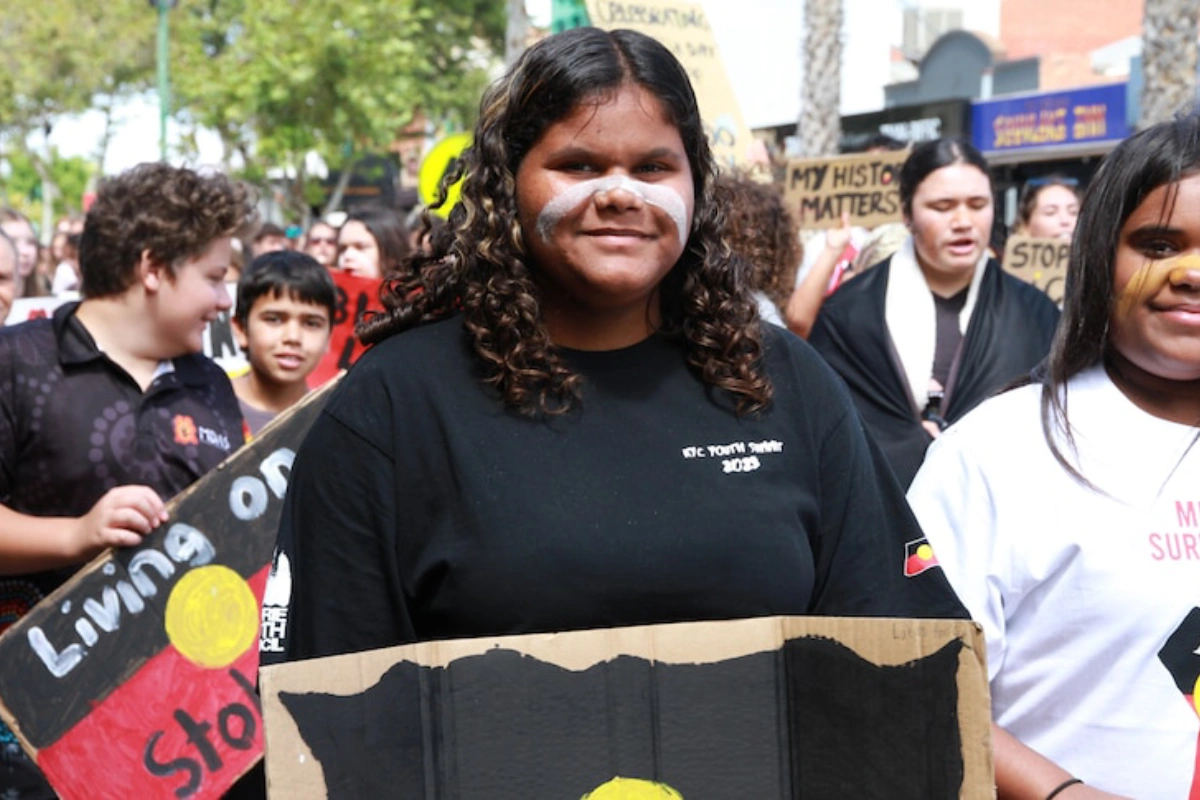
First Nations people across Australia are preparing to mark January 26 with rallies, marches and cultural events, continuing a protest tradition that stretches back nearly nine decades and predates the modern celebration of Australia Day itself.
For many Aboriginal and Torres Strait Islander Australians, January 26 does not symbolise national unity or celebration, but the beginning of invasion, dispossession and violence following the arrival of the First Fleet in 1788. While the date later evolved into “Australia Day”, it has long been remembered by Indigenous communities as a day of mourning, survival and resistance.
The modern protest movement traces its origins to January 26, 1938, when Aboriginal leaders organised the Day of Mourning to coincide with the 150th anniversary of British colonisation. Led by the Australian Aborigines League and the Aborigines Progressive Association, thousands marched through Sydney demanding full citizenship rights and an end to discriminatory government controls. The protest resulted in the first-ever meeting between Indigenous leaders and a sitting prime minister, Joseph Lyons.
That moment laid the groundwork for decades of activism, including the landmark 1967 referendum, which allowed Indigenous Australians to be counted in the census and empowered the Commonwealth to legislate for them.
Another defining moment came on January 26, 1972, with the establishment of the Aboriginal Tent Embassy on the lawns opposite Old Parliament House in Canberra. What began as a symbolic protest has become the world’s longest-running Indigenous land rights demonstration, expanding over time to include demands for sovereignty and self-determination.
Today, January 26 rallies—often referred to as Invasion Day or Survival Day—attract tens of thousands of participants nationwide, including Indigenous people and non-Indigenous allies. Organisers say the protests aim not only to challenge the date itself, but to highlight ongoing issues such as deaths in custody, child removals, incarceration rates, treaty negotiations and environmental protection.
Despite recent debate over protest laws, major rallies are expected to proceed this year. In New South Wales, organisers confirmed the annual Gadigal march will go ahead after police opted not to restrict the route, acknowledging the scale and significance of the event.
Cultural events also form a key part of the day. Festivals such as Yabun in Sydney and Share the Spirit in Melbourne provide spaces for music, art and education, offering Australians an opportunity to engage with the world’s oldest continuing cultures.
While many Indigenous leaders continue to call for the national day to be moved to a less divisive date, views within Indigenous communities are not uniform. Some, including Shadow Minister for Indigenous Australians Kerrynne Liddle, have said they will continue to celebrate Australia Day in their own way.
What remains constant is that January 26 holds deeply personal and political meaning for First Nations people—shaped by history, survival and the ongoing struggle for recognition and justice.