Libya’s House of Representatives Speaker, Aqila Saleh, has publicly declared the 2019 Turkey–Libya maritime memorandum “invalid,” marking the first such statement in six years and signalling a potential shift in Libya’s approach to maritime disputes in the Eastern Mediterranean.
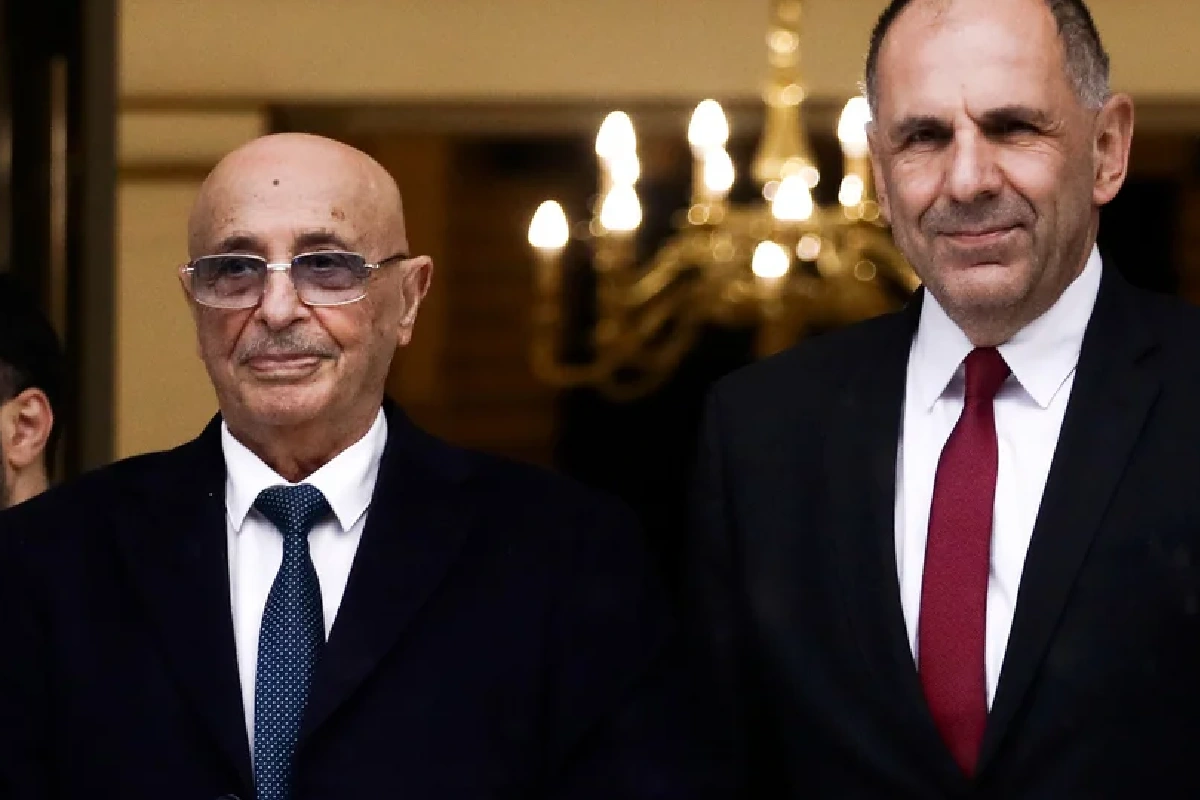
Speaking to the Libyan News Agency, just days after an official visit to Athens and a meeting with Greek Foreign Minister Giorgos Gerapetritis, Saleh said the agreement signed by the former Government of National Accord under Fayez al-Sarraj never received parliamentary approval and therefore has no legal standing.
Saleh stressed that, under Libya’s constitutional framework, only the House of Representatives has the authority to ratify international treaties, particularly those concerning maritime boundaries. Any agreement concluded outside this framework, he said, is legally void and non-binding on the Libyan state.
“Anything built on illegality remains illegal, regardless of how much time has passed,” Saleh stated, reaffirming that the Turkey–Libya memorandum was neither submitted to nor approved by parliament.
Beyond rejecting the agreement, Saleh outlined a willingness to pursue dialogue with Greece, Egypt and Turkey to redefine maritime jurisdictions in the Eastern Mediterranean. He said Libya now has an opportunity to move toward negotiations rather than confrontation, while making clear that Libyan sovereignty over its territorial waters remains a non-negotiable red line.
Referring to Greece, Saleh noted that Athens initially adopted a firm stance due to what it viewed as damage to its national interests, but later showed readiness for dialogue. He added that Egypt rejected the memorandum from the outset, citing concerns about regional instability.
At the same time, Saleh criticised Greece’s reliance on the island of Crete in defining its exclusive economic zone, describing this approach as “unreasonable” and “excessively close to the Libyan coast,” and arguing that it is not supported by international law.
Concluding his remarks, Saleh said Libya is not obliged to align itself with any particular geopolitical bloc. He emphasised that Libya remains an independent state, with national interests guiding all negotiations, alongside the pursuit of balanced relations with all regional actors.