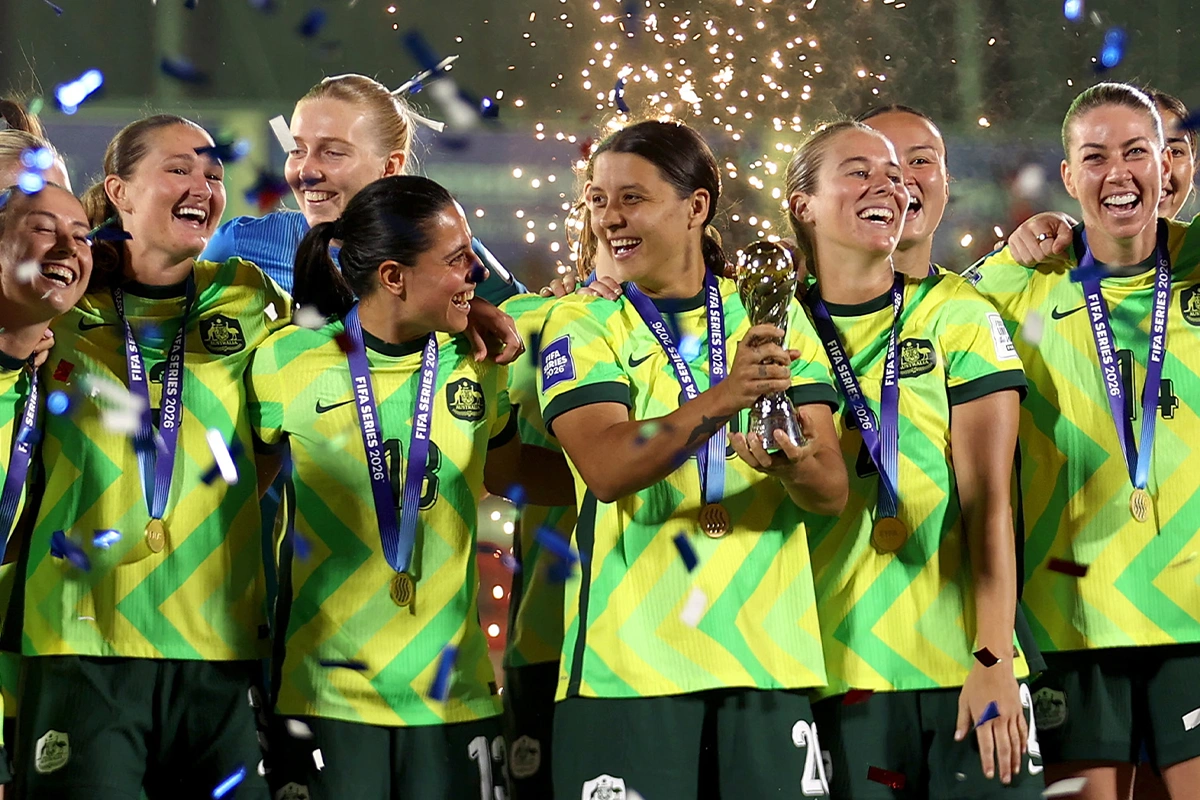
Australia’s Matildas have etched another unforgettable chapter in the nation’s sporting history, after defeating the home side Kenya 2–0 in the final at Nyayo National Stadium to win the inaugural FIFA Series in a performance that underlined their status as one of the world’s elite sides.
In front of an energetic home crowd of around 20,000 in Nairobi, Australia were tested by a determined Kenyan side, but ultimately prevailed thanks to goals from captain Sam Kerr and midfielder Clare Wheeler. Kerr opened the scoring with her 75th international goal—albeit a somewhat scrappy finish—before Wheeler sealed the victory in the second half to secure the historic title.
Despite the scoreline, the match was far from straightforward. Kenya matched the Matildas’ intensity for long periods, drawing energy from the home support and creating a competitive, physical contest that tested Australia’s structure and patience. The hosts’ resilience ensured the final remained in the balance until late in the game, highlighting the growing competitiveness of emerging football nations.
One of the defining moments of the match came in the second half when Caitlin Foord appeared to have scored Australia’s third goal, only for it to be disallowed in highly contentious circumstances.
The decision—reportedly due to the ball entering through the side netting—left players, coaching staff, and spectators perplexed, with Foord even receiving a yellow card for protesting the call.
While the controversy did not ultimately affect the result, it added an unusual edge to an otherwise controlled Matildas performance.
Head coach Joe Montemurro praised his squad’s discipline and adaptability, emphasising the value of the tournament as part of Australia’s long-term build towards the 2027 FIFA Women’s World Cup.
The FIFA Series, he noted, has provided crucial opportunities to test combinations, build squad depth and expose players to different styles of international competition.
The victory also reflects the broader purpose of the FIFA Series, a newly introduced international competition designed to provide meaningful matches between teams from different confederations.
For Australia, the tournament has served as both a proving ground and preparation platform ahead of future major competitions, including the 2027 FIFA Women’s World Cup.
Throughout the tournament, the Matildas demonstrated both depth and adaptability—qualities that have become hallmarks of the squad in recent years.
From their dominant opening win over Malawi to their composed display in the final, Australia showed an ability to blend experienced leadership with emerging talent.
For Kenya, reaching the final on home soil marked a significant achievement, signalling progress and ambition within their national program despite falling short against one of the world’s top-ranked sides.
As the Matildas lifted the trophy in Nairobi, the moment represented more than just a tournament win.
It underscored Australia’s continued rise in women’s football and its intent to remain a global force—setting the benchmark as the first champions of a competition that is likely to grow in importance in the years ahead.