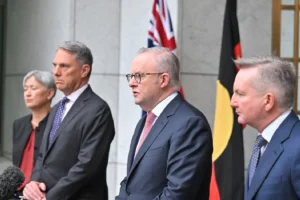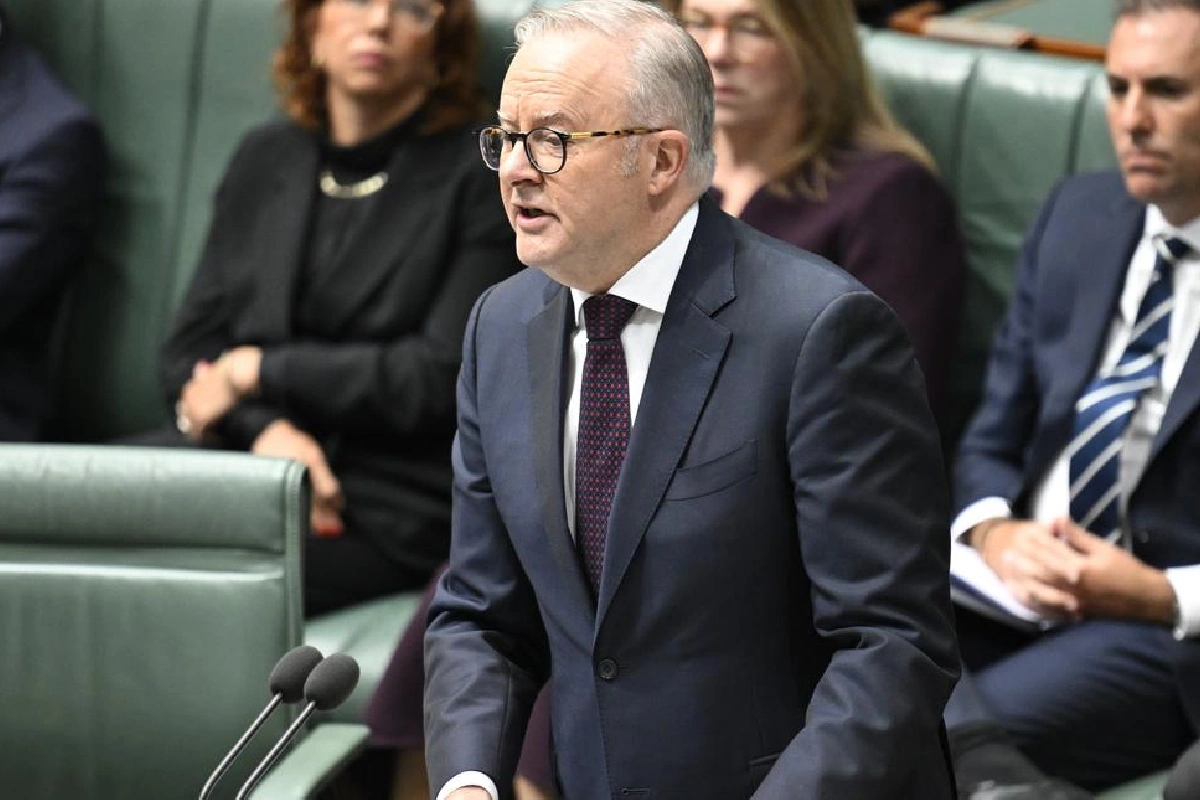
Prime Minister Anthony Albanese has issued a stark warning to Australians, declaring that his government’s hate crime and national security reforms may never return to parliament if they fail to pass this week.
In an extraordinary move following the deadly Bondi terror attack, Mr Albanese recalled federal parliament two weeks early, summoning MPs and senators back to Canberra to debate Labor’s proposed legislative response. The emergency sitting comes amid intense political pressure, fractious negotiations in the Senate, and growing public demands for action after 15 people were killed and dozens injured in the alleged ISIS-inspired attack on December 14.
Speaking on ABC Radio Melbourne, the Prime Minister made it clear that the government would not repeatedly reintroduce the legislation if it were defeated.
“We’re not a government that puts things up over and over again to see them defeated,” Mr Albanese said, confirming that if the hate crime reforms do not pass on Tuesday, they may not be revisited.
When pressed on whether the laws would be taken off the table altogether after this week’s emergency parliamentary session, the Prime Minister replied bluntly: “Correct.”
While no formal debate on the proposed reforms was scheduled for Monday, backroom negotiations intensified ahead of Tuesday’s expected votes. Over the weekend, Mr Albanese announced the government would split its original omnibus bill, separating gun and customs law reforms from hate crime and migration-related measures.
The revised approach follows resistance from both the Greens and the Coalition, who had signalled they would block the legislation in its original form. Labor, which lacks a Senate majority, must rely on crossbench or opposition support to secure passage.
Under the new structure, gun law reforms are expected to pass with the backing of the Greens, while negotiations with the Coalition over the second tranche — covering hate crimes and migration powers — are ongoing.
The Prime Minister also conceded that proposed racial vilification provisions would be shelved for now, acknowledging they lacked sufficient parliamentary support.
“It’s clear that will not have support,” he said.
The Coalition has rejected accusations of hypocrisy for opposing the government’s snap reforms, despite previously urging Labor to act swiftly after the Bondi attack. Liberal Senator Dave Sharma defended the opposition’s stance, arguing that the Prime Minister himself had reversed earlier positions on recalling parliament and establishing broader inquiries.
“What’s hypocritical is the Prime Minister first saying there was no need for parliament to be recalled, and then capitulating,” Senator Sharma said.
He added that the Coalition had sought to work constructively on measures with broad community backing, particularly to combat antisemitism, but accused the government of political obstruction.
The Coalition’s position has drawn criticism from Jewish community groups, including the Executive Council of Australian Jewry, who have urged bipartisan unity in the face of rising extremism.
Parliament began its recalled sitting on Monday with a day reserved for condolences. Families of the victims attended the House of Representatives as MPs paid tribute to the 15 people killed in the attack, with the government describing the day as one of “healing”.
The next two days are expected to be decisive. Health Minister Mark Butler has called on all parties to put politics aside and support the reforms, describing Tuesday as “a day of action”.
“This is the worst terror attack in our history,” Mr Butler said. “Now is the time for unity.”