Pro-Palestine activists are preparing to stage their first major protest in Melbourne’s central business district since the Bondi Beach terror attack, vowing to continue disruptive demonstrations into 2026, as business leaders intensify calls for the Allan government to intervene.
The planned rally, scheduled for Sunday outside the State Library of Victoria, comes less than a month after 15 people were killed in what authorities have described as an antisemitic terrorist attack at Bondi Beach. The protest has sparked renewed concern among political leaders, business groups and members of the Jewish community, who say the timing and scale of the demonstration risk deepening social tensions and economic disruption.
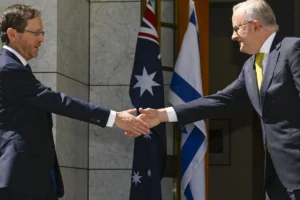
Organisers say the rally will oppose the anticipated visit of Israeli President Isaac Herzog to Australia and reject what they describe as attempts to associate the pro-Palestine movement with the Bondi massacre. The demonstration is understood to be the 106th protest held in Melbourne since Hamas’ October 7, 2023 attack on Israel and the subsequent war in Gaza.
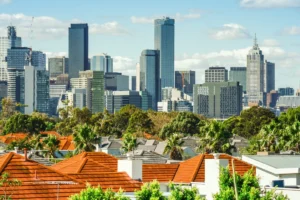
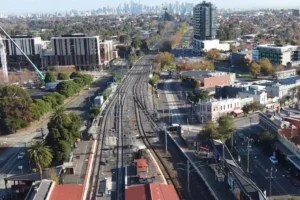
Business leaders warn that Melbourne risks beginning 2026 in much the same way the previous two years have unfolded — with rolling protests, blocked streets and declining confidence in the city centre.
Committee for Melbourne chief executive Scott Veenker said constant demonstrations were affecting how the city functions and were undermining the CBD’s recovery.
“Victoria cannot afford to be seen as the protest capital of Australia,” Mr Veenker said. “Businesses are fed up. They are losing trade, workers are struggling to get into the city or are having shifts cancelled, tourists are choosing to stay away, and residents are dealing with ongoing disruption to their daily lives.”
The Victorian Chamber of Commerce and Industry echoed those concerns, estimating the cumulative cost of pro-Palestine protests to Victorian taxpayers at approximately $25 million. Acting chief executive Amelia Bitsis said businesses regularly reported losses of up to 40 per cent in daily takings during protest activity.
“Yet again, business owners, traders and workers will be forced to pay a significant price,” Ms Bitsis said. “If Melbourne’s economy stalls, the state’s economy falters.”
Ms Bitsis called on the Victorian government to act decisively to ensure the city centre remains safe, accessible and economically viable, while balancing the right to protest with the rights of residents and businesses.
In the days following the Bondi terror attack, Premier Jacinta Allan pledged to introduce new special police powers that would allow the Chief Commissioner of Police to direct protesters to stop or move on following a designated terrorist event. However, the government has so far declined to recall parliament to enact the changes and has rejected calls to introduce a NSW-style protest permit system that would give police broader discretion to block demonstrations.
On social media, Melbourne’s Free Palestine movement, which had temporarily paused protests after the Bondi attack, urged supporters to mobilise again, citing alleged Israeli violations of the ceasefire and violence in the West Bank.
“Herzog’s visit whitewashes Israeli atrocities as the state of Israel is currently on trial before the International Court of Justice for the crime of genocide,” the group posted. “The Gaza genocide continues, so must we.”
The post has been widely shared online, drawing hundreds of reshares on Instagram.
Other organisations, including the Australian Palestinian Advocacy Network, the Australian National Imams Council and Labor Friends of Palestine NSW, have also called on Prime Minister Anthony Albanese to withdraw the invitation to the Israeli president.
As Melbourne braces for another weekend of protest activity, pressure continues to mount on the Allan government to strike a balance between civil liberties, public safety and the economic stability of the city.