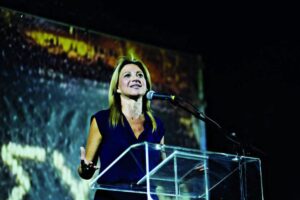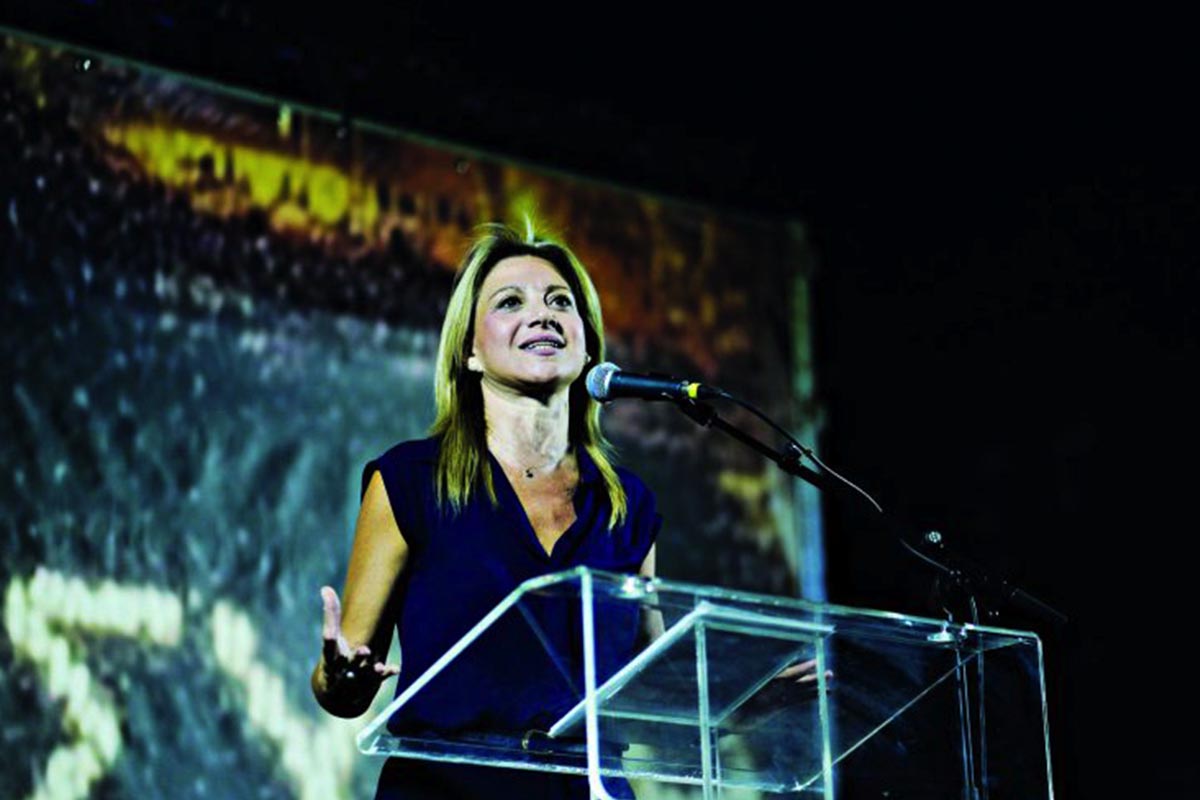
A wave of political vilification in full motion “Targeting Maria Karystianou at all costs,” on orders of the ‘centre of power’. Targeting Maria Karystianou: How an independent voice became a threat.
Over the past few days, Maria Karystianou has been subjected to an unprecedented campaign of attacks by the political establishment. I emphasise “now”, because as the saying goes, it is easier to suppress something at its inception; later, it becomes far more difficult.
It is clear that Maria unsettles the status quo. She disturbs the murky waters of politics and represents a genuine challenge to a deeply entrenched political system. That system now appears to be in a state of panic. Online networks aligned with various political interests have erupted, hurling abuse, spreading insinuations and recycling hostility on cue.
The message seems to be simple: Maria Karystianou must not be allowed to enter politics. She may well be the only citizen in the country for whom a section of public discourse openly demands the denial of that basic democratic right.
For decades, a small circle of political families and power networks have enjoyed unrestricted access to public life — yet Maria Karystianou is told she does not belong. Why?
- Is she uneducated?
- Is she without professional
standing? - Is she dishonest?
- Is it because she is a woman?
Is it because she is a mother who lost her child unjustly in a tragedy that could have been avoided had basic safety standards been followed?
Or are such excuses simply convenient?
- What exactly disqualifies Maria
Karystianou from political
participation? - What has she done to provoke
such hostility?
Speculation and rumours have been deliberately circulated, linking her to various political actors and agendas. None of this has been substantiated, yet the narratives persist.
Almost instantly, labels were imposed upon her — contradictory ones at that. She has been portrayed, depending on the commentator, as aligned with opposing ideological camps, as opportunistic, as naïve, or as dangerous. A photograph here, a passing remark there, a professional association elsewhere — each is seized upon and repackaged to suit a particular narrative.
Attempts to categorise her neatly within existing political divisions are, at best, disingenuous. At worst, they are deliberate efforts to neutralise an independent voice by forcing it into familiar and polarising frameworks.
Maria Karystianou has the same right as any Greek citizen to engage in public life. Yet because her presence challenges established interests — across the political spectrum — she now finds herself facing a coordinated campaign of discreditation and distortion.
Rather than engaging honestly with her ideas, parts of the public conversation have focused on character attacks and speculative associations. This serves no democratic purpose.
It would be far more constructive to evaluate only what she actually says and proposes. When someone speaks openly about issues such as judicial independence, accountability in public office, effective oversight of political power, and real consequences for corruption, it is worth asking how long citizens have waited to hear such positions articulated so clearly.
Perhaps it is time to move beyond caricatures and fear, and instead engage with substance.