This week in Athens, the Defence Ministers of Israel and Greece consolidated a partnership that has moved beyond simple alignment and into strategic substance. Israel and Greece have the capacity to confront Turkey. The visit concludes tomorrow. Air. Sea. Intelligence. Interoperability. Necessary. Self-evident.
And then there is the question hanging in the room: the Kurds — in northern Syria, and in Turkey.
At this moment, a decisive squeeze is under way in north-eastern Syria. Kurdish forces are being pushed into arrangements that weaken them, absorb them and remove them as independent actors. Damascus is reasserting control. Ankara is demanding disarmament. ISIS detention facilities and camps are changing hands at the most sensitive possible moment.
If the Kurds are defeated, this will not be a mere Syrian footnote, but a regional mechanism with far wider consequences.
As one front closes, Ankara’s decision-making cycles shorten, freeing up attention, resources and coercive capacity. The same pressure then reappears across every theatre we are already confronting: the Eastern Mediterranean, Cyprus, Libya, the Aegean, Somalia — wherever Turkey tests delay, fragmentation and the absence of cost.
The front vis-à-vis Turkey is one front. Those who compartmentalise it misunderstand it.
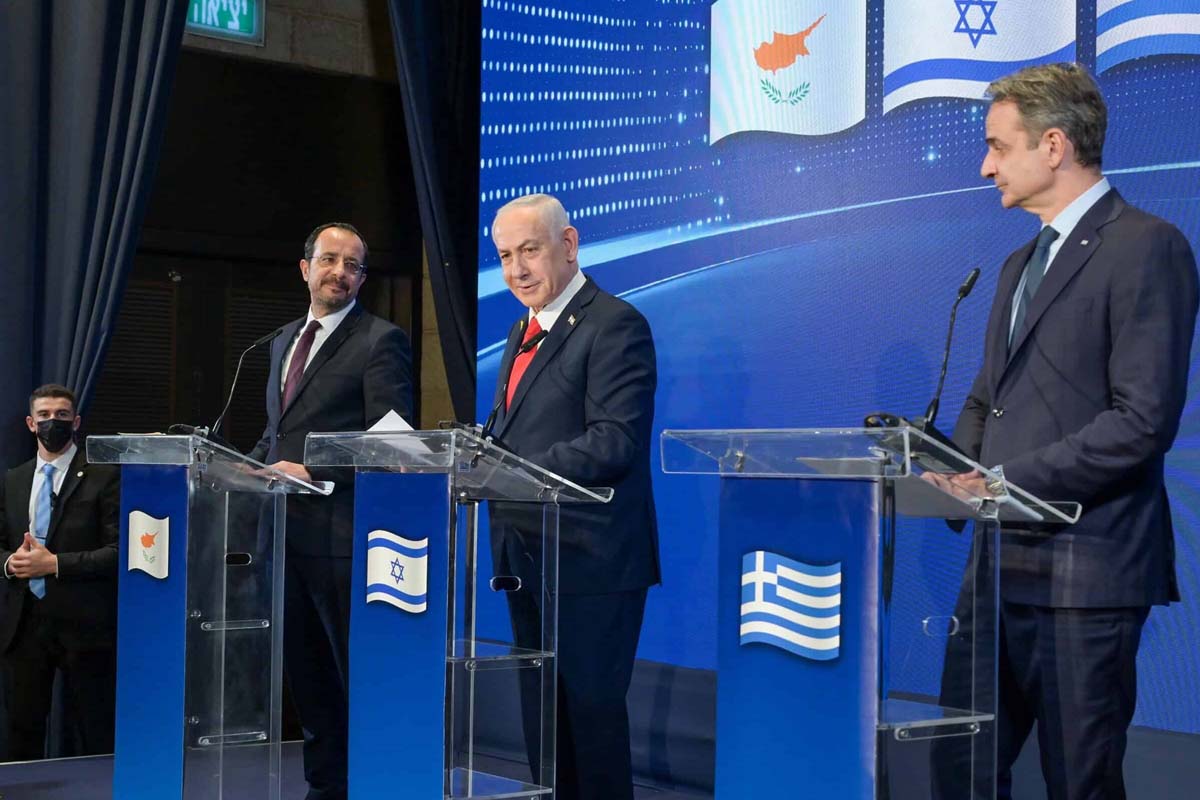
Israel and Greece have the capacity to confront Turkey — militarily, in the air and at sea, in intelligence, technology and coordination. And morally as well: two democracies, two blue-and-white flags, as Prime Minister Netanyahu once put it.
The decisive test of Israel–Greece cooperation is not only what we build together, but which red lines we understand together.
Because if the Kurds fall today, tomorrow we will face the same Turkey — closer, less constrained, and more convinced that time, rather than resistance, is on its side.