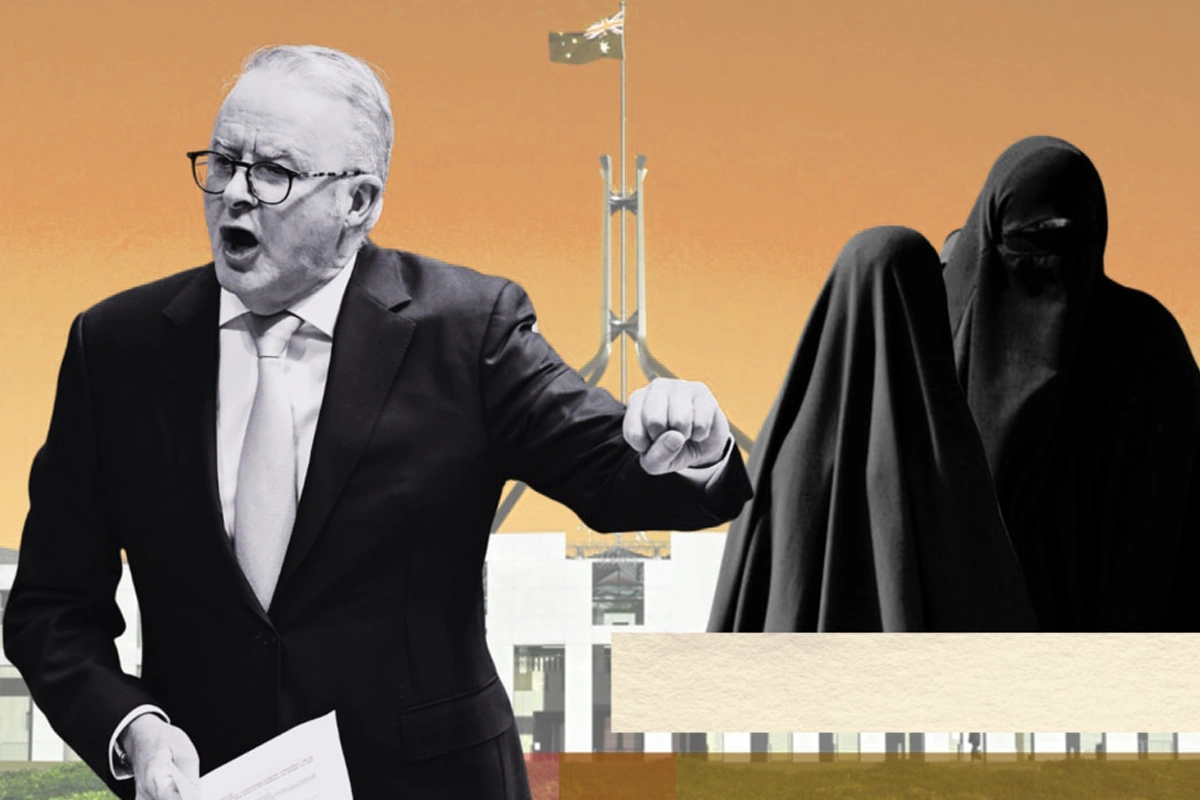
Prime Minister Anthony Albanese’s blunt warning that ISIS-linked families would “face the full force of the law” if they returned to Australia reflects a political reality: national security remains a red-line issue for voters.
With reports that 11 families of women and children attempted to leave the Al-Roj camp in northeast Syria before being turned back, the government has again drawn a firm boundary — no active assistance, no repatriation program, and strict application of Australian law to anyone who does make it home.
The government’s position is consistent with its long-standing argument that individuals who travelled to support Islamic State made a conscious choice. Albanese has framed the issue in moral as well as legal terms, suggesting there can be no sympathy for those who aligned themselves with a violent extremist movement seeking to establish a caliphate.
Security agencies have repeatedly warned that Syrian detention camps remain incubators of radicalisation, and senior officials argue that granting passports or facilitating return could expose Australians to unacceptable risk.
Opposition figures have gone further. Liberal Senator Sarah Henderson has argued that anyone who still subscribes to extremist ideology should not be permitted back. Pauline Hanson has called for a broader hardline approach, linking the issue to domestic terrorism fears and social cohesion. For critics of repatriation, the Bondi attack — invoked in political debate — underscores the consequences of underestimating extremist threats.
Yet the debate is not purely binary. Human rights advocates and some security experts argue that leaving Australian citizens — particularly children — in unstable camps may create greater long-term risk. Previous limited repatriations under both Coalition and Labor governments have been conducted under strict monitoring regimes, including control orders and ongoing surveillance.
The legal principle that citizenship carries both rights and obligations complicates calls for blanket exclusion, particularly where children are concerned.
Ultimately, the Albanese government is attempting to balance three imperatives: protecting national security, upholding the rule of law, and managing public confidence. By emphasising that anyone who breaches Australian law will be prosecuted, the Prime Minister signals zero tolerance. By refusing active repatriation, he minimises immediate political risk.
But the issue is unlikely to disappear. As long as Australian citizens remain in Syrian camps, the tension between security, accountability and humanitarian responsibility will continue to test policymakers. The challenge is not simply whether they return — but how Australia manages the consequences if they do.