Greek authorities have revealed that the National Intelligence Service (EYP) had been closely monitoring a 36-year-old Georgian national for approximately one month before he was brought in for questioning on Monday (March 2) over alleged espionage activities linked to the Souda Bay naval base in Crete.
According to security sources, the suspect was found in possession of photographic material considered consistent with surveillance of sensitive military infrastructure. Officials have not publicly detailed the full contents of the material, but it is understood to relate to facilities in and around the strategically significant Souda Bay area.
The case bears similarities to last summer’s arrest of a 26-year-old Azerbaijani national who was accused of photographing the same naval base. That arrest followed the detention of another Azerbaijani individual in Cyprus, who had allegedly photographed military installations in Limassol and Paphos and was officially linked by Cypriot authorities to contacts with Iran’s Revolutionary Guards.
Authorities state that the 36-year-old suspect, who is of Azerbaijani origin despite holding Georgian nationality, arrived in Greece on February 3 and travelled directly to Chania. There, he rented a room with a view of Souda Bay.
Security services reportedly placed him under observation shortly after his arrival. On February 16, he allegedly attempted to book a room at the same hotel where the Azerbaijani suspect had stayed last summer, but no rooms were available.
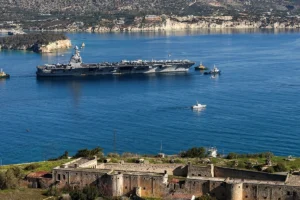
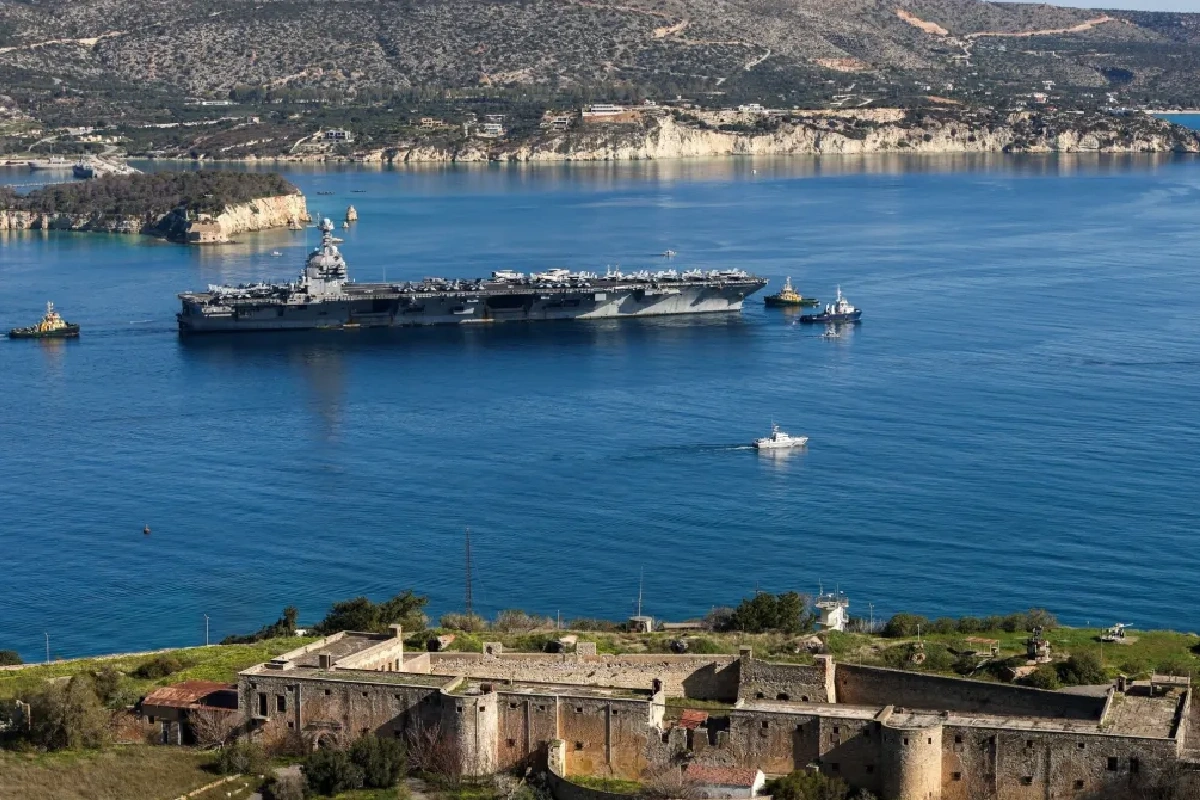
He was also present in the Souda area on February 24, the day the US aircraft carrier USS Gerald R. Ford arrived at the naval base.
Over the weekend (February 28–March 1), the suspect travelled to Athens. On Monday, March 2, he checked out of his hotel and headed toward Athens International Airport without having issued a flight ticket. Authorities, concerned he might attempt to depart for an unknown foreign destination, decided to detain him en route to the airport.
He was held in a designated area at the airport for questioning as investigations continued.