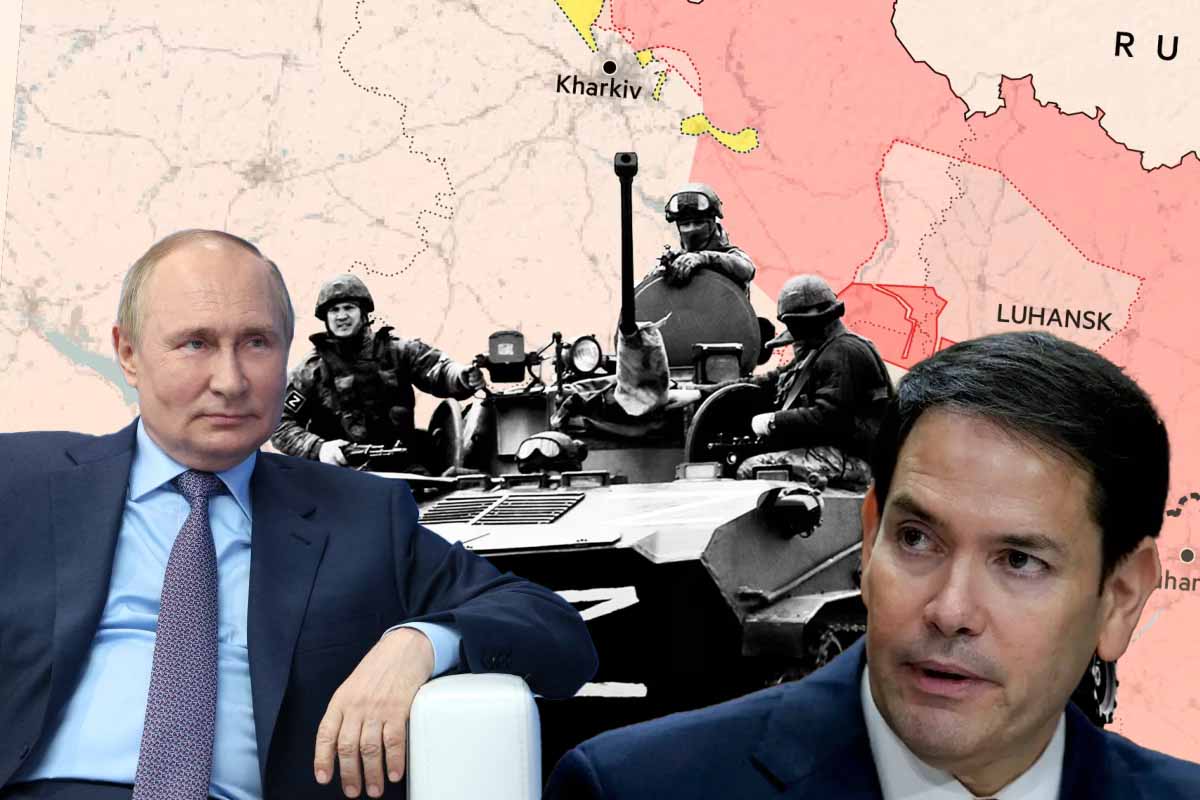
Washington concedes strategic defeat in Ukraine as the era of grand declarations about “imminent victory” and the unwavering defence of democracy appears to be drawing to a close. The curtain has been pulled back — not by a Kremlin spokesman or an anti-war activist, but by the United States Secretary of State himself.
In remarks that mark a striking departure from years of official rhetoric, Marco Rubio implicitly acknowledged the limits of American power in shaping the outcome of the war. After months of strategic exhaustion, Washington is now confronting a reality it long sought to deny: Russia retains logistical depth, military resilience, and strategic patience that the West has failed to neutralise.
Moscow, meanwhile, has set out firm and non-negotiable conditions — including territorial demands and security guarantees — while the US administration struggles to maintain coherence, consistency, or political momentum. The contrast is stark. Where Russia projects clarity and resolve, Washington appears uncertain and increasingly reactive.
That this admission comes from Rubio is particularly telling. Long regarded as one of the most outspoken advocates of a hardline approach towards Moscow, his shift is not merely diplomatic nuance — it is an implicit recognition that Western strategy has fallen short.
For years, the public was assured that sanctions would cripple Russia’s economy and that Western military aid would decisively alter the battlefield. Instead, the war has dragged on, costs have mounted, and political appetite has waned. The uncomfortable truth is now unavoidable: the United States has exhausted both leverage and options.
By suggesting that the future of the conflict ultimately lies in Moscow’s hands, Rubio echoes what many geopolitical analysts have long argued behind closed doors — that Washington no longer has the ability to impose outcomes, only to manage decline.
While the White House attempts to mask what is effectively a strategic retreat, the Kremlin has made its position unmistakably clear. The post-war security architecture, borders, and balance of power in the region will be shaped on Russia’s terms, not those of a Western bloc increasingly constrained by financial limits, industrial shortages, and political fatigue.
This represents a profound reversal of roles. The superpower that once redrew borders, engineered regime change, and dictated global terms now finds itself watching events unfold from the sidelines.
Perhaps the most sobering aspect of this moment is the silence surrounding Ukraine itself. Rubio’s remarks implicitly confirm that Kyiv is no longer the primary decision-maker in its own fate. Once framed as a vital strategic partner, Ukraine risks becoming a geopolitical liability — sidelined as Washington shifts its focus towards larger priorities, particularly the long-term contest with China.
The heroic narrative has collapsed. What remains is a cold calculus of territory, influence, and strategic trade-offs.
This moment extends far beyond Ukraine. It signals a broader shift in the international order. The United States is no longer the unquestioned global arbiter it once was. If even Marco Rubio — a symbol of American assertiveness — is forced to acknowledge the limits of US power, the message to the rest of the world is unmistakable.
The age of American imposition is fading.
Russia understands this. China has already adapted to it. And now, following Rubio’s remarks, it is evident to all: the geopolitical chessboard has changed — and Washington is no longer dictating the moves.