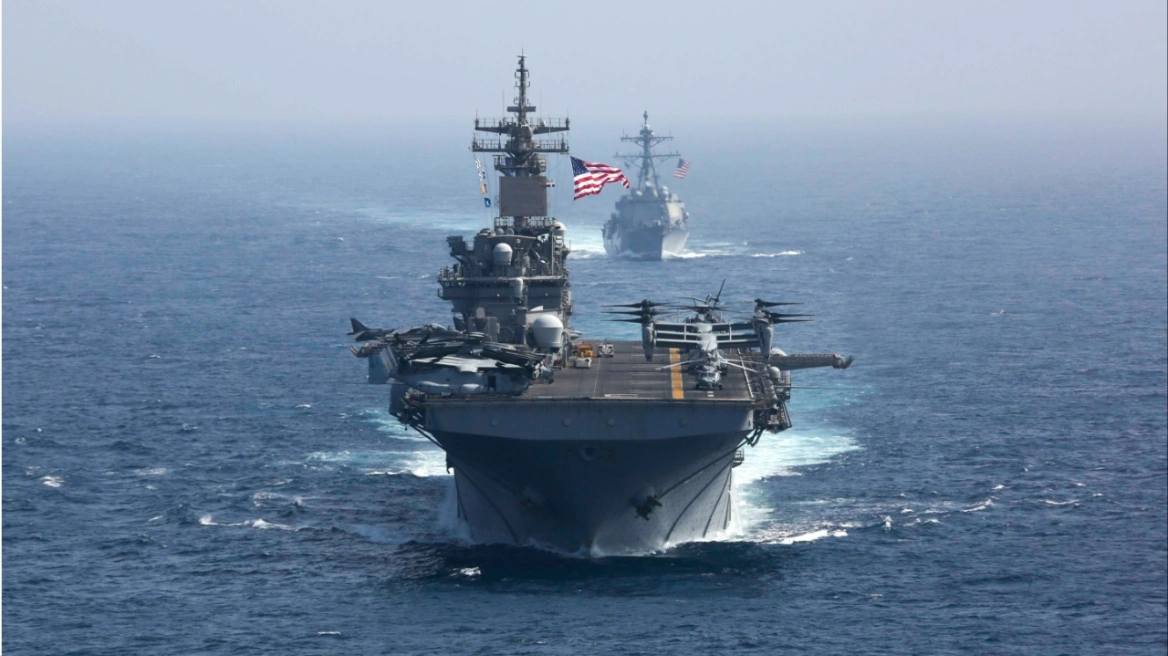
The United States has significantly reinforced its military presence in the Middle East, deploying two aircraft carrier strike groups, additional warships and combat aircraft as tensions with Iran escalate.
The move comes amid reports that President Donald Trump is weighing potential military strikes against Iranian targets if diplomatic efforts over Tehran’s nuclear program fail.
According to American media outlets, US forces in the region have been placed on heightened alert and are prepared to act at short notice, with some reports suggesting that military options could be executed as early as this weekend if directed by the White House. Pentagon officials have not confirmed specific operational timelines but have acknowledged the repositioning of assets as part of what they describe as a “deterrence and readiness posture.”
The deployment includes advanced fighter jets, strategic bombers and missile defense systems designed to protect US personnel and allied interests in the region. Two aircraft carriers, accompanied by guided-missile destroyers and cruisers, are now positioned within operational range of key Iranian infrastructure.
Despite the military buildup, diplomatic channels between Washington and Tehran remain open. Indirect negotiations, facilitated by intermediaries, are continuing in an effort to reach a new agreement governing Iran’s nuclear activities. US officials insist that their objective remains a negotiated solution that prevents Iran from acquiring nuclear weapons capability.
However, significant disagreements persist. Washington is demanding stricter verification measures and limits on uranium enrichment, while Tehran has signaled it will not accept terms it views as undermining its sovereignty or economic stability. Iranian officials have warned that any military strike would provoke a “decisive response.”
The White House has reiterated that all options remain on the table. While emphasizing that diplomacy is the preferred path, President Trump has reportedly made clear that failure to secure an acceptable agreement could result in military action.
Regional governments are closely monitoring developments, concerned that any escalation could destabilize an already volatile Middle East. Analysts warn that even limited strikes could trigger broader confrontation, drawing in allied militias and threatening global energy markets.
For now, the situation remains fluid, defined by a fragile balance between negotiation and confrontation. The coming days are expected to be critical in determining whether diplomacy prevails or the region edges closer to open conflict.