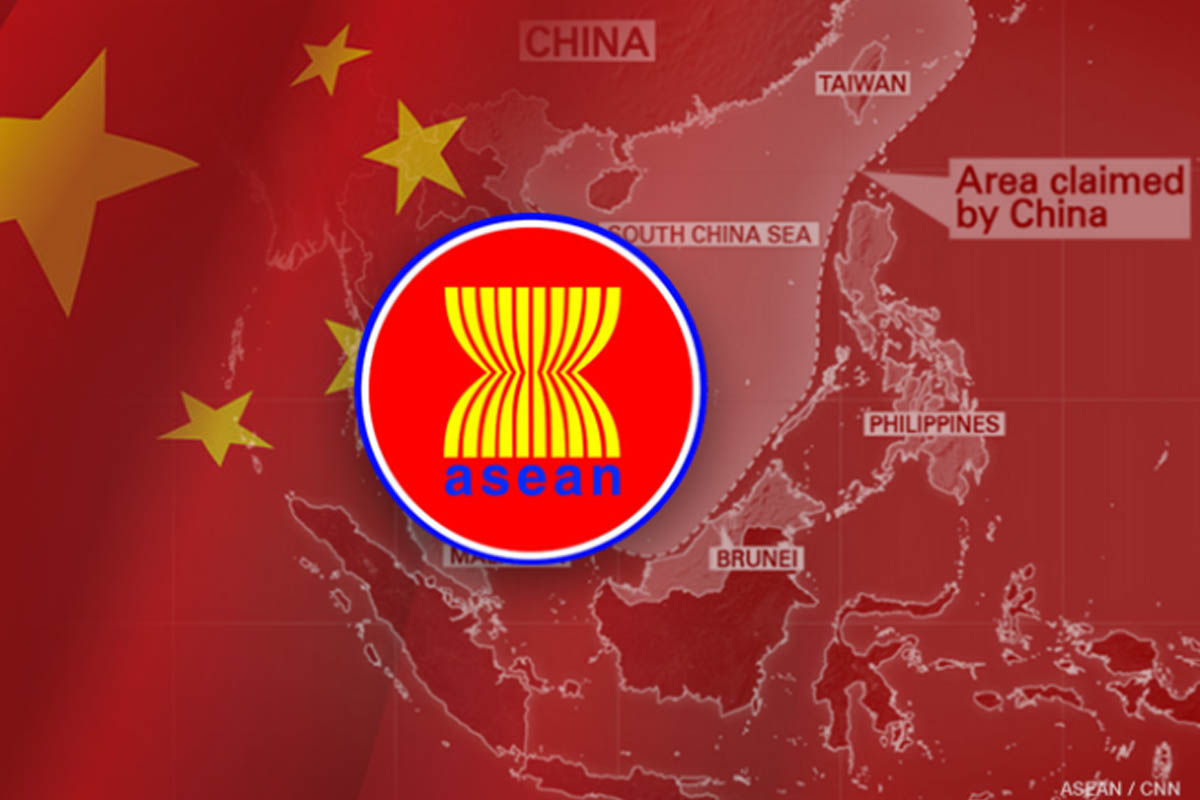
After Vietnam, this should give Trump a rather strong indication that ASEAN countries have no interest in following Washington’s lead in decoupling from China.
In fact, quite the opposite is happening.
And it makes perfect sense. ASEAN–China trade is on course to reach nearly $1 trillion this year (it stood at $234.17 billion in Q1 alone — a 7.1% year-on-year increase: source), which is nearly double the volume of ASEAN’s trade with the US ($476.8 billion in 2024: source).
In fact, ASEAN–China trade has now grown so large it’s comparable to US–EU trade, which is also close to $1 trillion a year (source). From this year, it may even become the most important trading relationship in the world.
Why, then, would ASEAN countries agree to any ‘deal’ that would require them to sacrifice their business with China just to maintain economic ties with the US? Especially when:
- The US is growing at a far slower pace than China, with no possibility of seeing ASEAN trade growth rates of 7%+ a year.
- Washington is becoming increasingly protectionist, openly stating its goal to reduce imports.
Effectively, the US is asking ASEAN nations to abandon their largest, fastest-growing trade relationship for a smaller, slower-growing one — which, on top of that, has no intention of increasing its purchases from them in the future.
No rational economic actor would agree to such a deal.
In fact, if you read what ASEAN economists and institutions are saying — for example, Singapore’s ASEAN+3 Macroeconomic Research Office (AMRO) (source) — it’s clear that their current strategy is to build greater resilience. By that, they explicitly mean reducing their economic reliance on the US and deepening intraregional integration.
And again — this is entirely logical. From ASEAN’s perspective, the biggest threat to their prosperity is exactly the kind of policies typified by Trump’s tariffs and the pressure to decouple from China. The natural, defensive response is to reduce exposure to the US so that such threats lose their leverage.
The idea that coercive trade tactics would pull ASEAN nations closer to Washington rather than push them further away betrays a fundamental misunderstanding within the Trump administration — a serious misreading of both economic incentives and basic human nature.